INTERSECTION (REGULATED, TRAFFIC LIGHT)
Questions are accessible without an account and load in batches of 20 for faster browsing.
What this topic covers
Questions about intersections controlled by traffic officers and traffic lights.
Questions in the full bank: 95
Available questions: 95
How to study the questions
- Read the question and examine the image, if there is one.
- Choose an answer to see the correct option and any available explanation.
- Continue to the next question, then review your result. In-depth learning is available in your account.
Educational material; not a substitute for the current official rules.
Questions in this topic
Traffic is prohibited for:
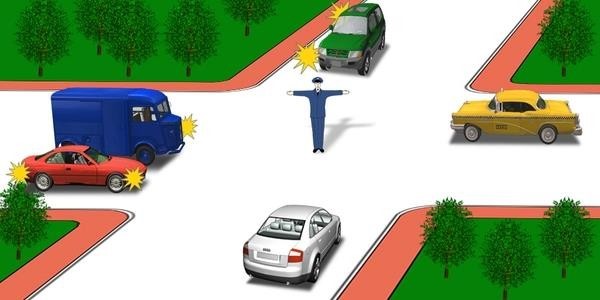
- Red and white cars.
- Blue, green, and white cars.
- White, blue, and yellow cars.
The correct answer: Blue, green, and white cars.
The correct answer is “Blue, green, and white cars.”. The active traffic signal or controller instruction comes first, while movement already started and intersecting lawful paths must still be considered. Remember: a permissive signal allows movement but does not cancel a duty to yield where paths lawfully intersect.
Which drivers have the right to go straight?
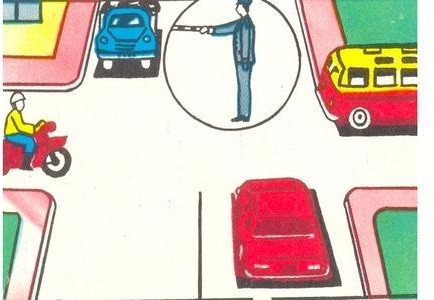
- Bus and motorcycle drivers.
- Light passenger and cargo vehicle drivers.
- Light passenger vehicle driver.
The correct answer: Light passenger vehicle driver.
The correct answer is “Light passenger vehicle driver.”. The active traffic signal or controller instruction comes first, while movement already started and intersecting lawful paths must still be considered. Remember: a permissive signal allows movement but does not cancel a duty to yield where paths lawfully intersect.
Which vehicle driver must yield the right of way?
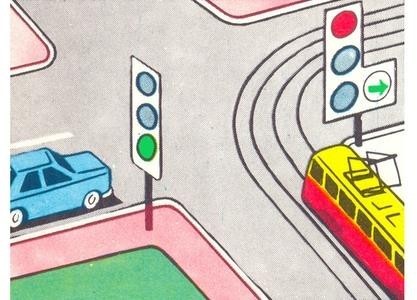
- Car driver.
- Tram driver.
The correct answer: Tram driver.
The correct answer is “Tram driver.”. The active traffic signal or controller instruction comes first, while movement already started and intersecting lawful paths must still be considered. Remember: a permissive signal allows movement but does not cancel a duty to yield where paths lawfully intersect.
If the controller's right hand is extended forward, non-rail vehicles are allowed to move:
- From the left side — to the left and in the opposite direction.
- From the right side — only to the right.
- From the left side — in all directions.
- From behind — only to the right.
The correct answer: From the left side — in all directions.
The correct answer is “From the left side — in all directions.”. The active traffic signal or controller instruction comes first, while movement already started and intersecting lawful paths must still be considered. Remember: a permissive signal allows movement but does not cancel a duty to yield where paths lawfully intersect.
Which answers correctly indicate the vehicles allowed to move?
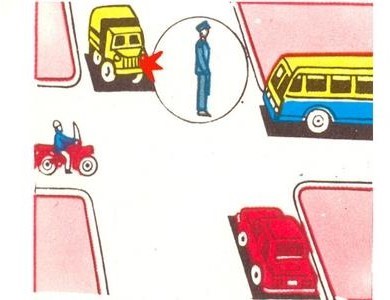
- Motorcycle.
- Cargo vehicle.
- Bus.
- Light passenger vehicle.
- Light passenger and cargo vehicles.
The correct answer: Light passenger vehicle.
The correct answer is “Light passenger vehicle.”. The active traffic signal or controller instruction comes first, while movement already started and intersecting lawful paths must still be considered. Remember: a permissive signal allows movement but does not cancel a duty to yield where paths lawfully intersect.
Which vehicle driver must yield the right of way?
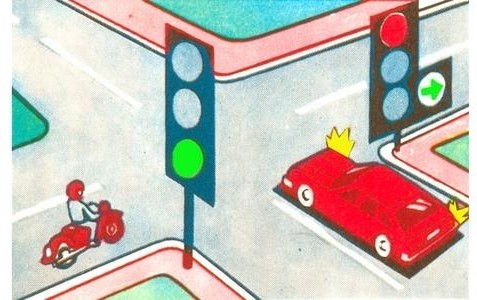
- Motorcycle driver.
- Car driver.
The correct answer: Car driver.
This signal from the controller means that traffic is allowed for:
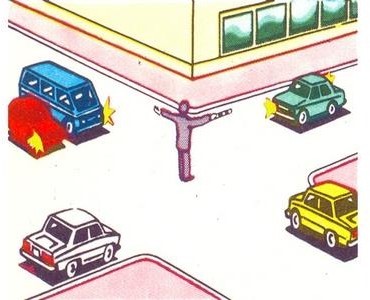
- Blue and green cars. Red, yellow, and white are prohibited.
- Blue, red, and green cars. Yellow and white are prohibited.
The correct answer: Blue, red, and green cars. Yellow and white are prohibited.
Which vehicles can make a right turn?
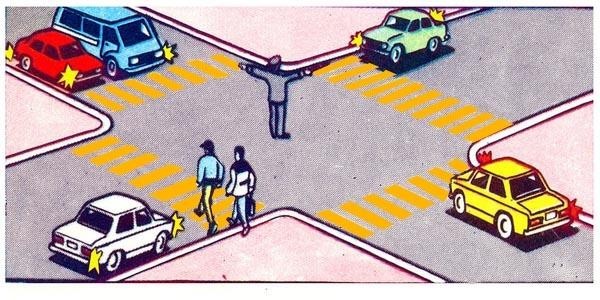
- Only the red car.
- All vehicles.
- Red and green cars.
The correct answer: Red and green cars.
Traffic is allowed:
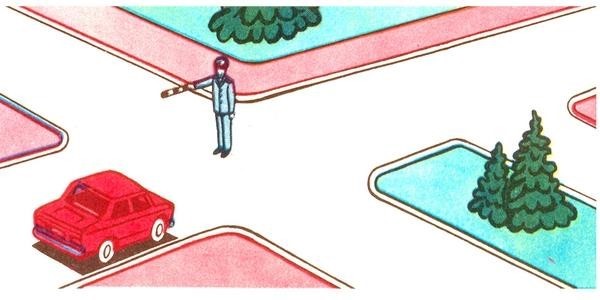
- Straight.
- To the right — first lane.
- To the right — second lane.
- To the right — first and second lanes.
The correct answer: To the right — first lane.
Traffic is allowed:
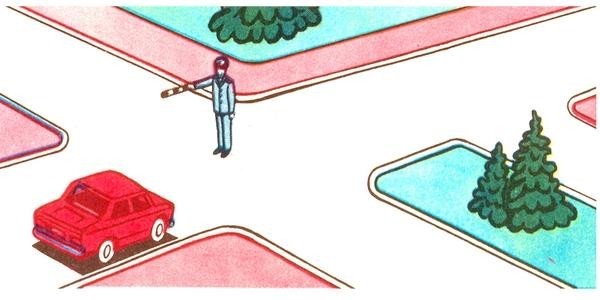
- To the right — first lane.
- Straight and to the right — first lane.
The correct answer: To the right — first lane.
This traffic light prohibits traffic when
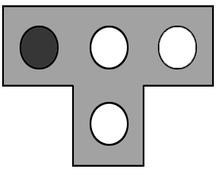
- Only to the left.
- Straight and to the left.
- Straight and to the right.
- Only to the right.
The correct answer: Only to the left.
If the regulator’s arms are extended to the sides or lowered, then traffic of non-rail vehicles is allowed
- From the back and front — only to the right.
- From the left and right sides — straight and to the right.
- From the left and right sides — only straight.
The correct answer: From the left and right sides — straight and to the right.
The driver of the red car
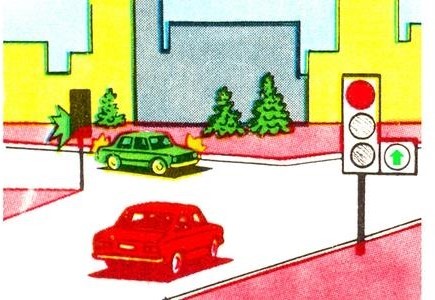
- Must yield the right of way.
- Has the right of way.
The correct answer: Must yield the right of way.
Which vehicles are allowed to proceed?
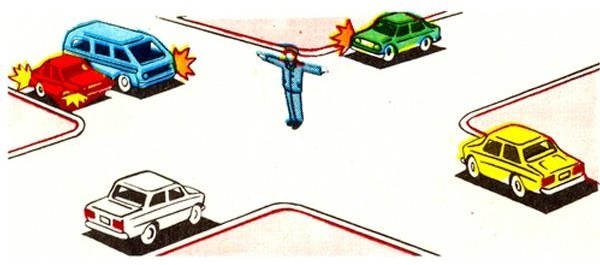
- Yellow and red cars.
- Green, red, and white cars.
- White and green cars.
The correct answer: Yellow and red cars.
On which traffic light signal can a driver complete a reverse maneuver?
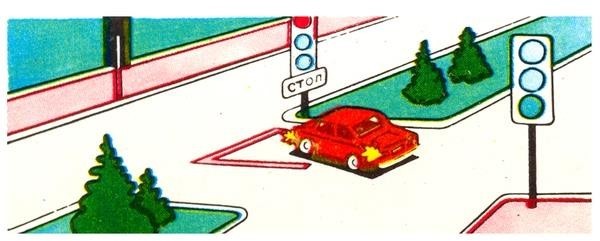
- Red.
- Green.
- Any.
The correct answer: Green.
What does the combination of yellow and red traffic light signals mean?
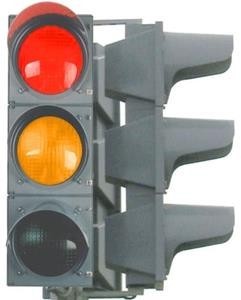
- Allowed to start moving.
- Traffic is prohibited and it notifies that the green signal will come soon.
- A special sound signal and a vehicle with flashing lights is approaching the intersection.
The correct answer: Traffic is prohibited and it notifies that the green signal will come soon.
In which picture is the driver making the correct turn?
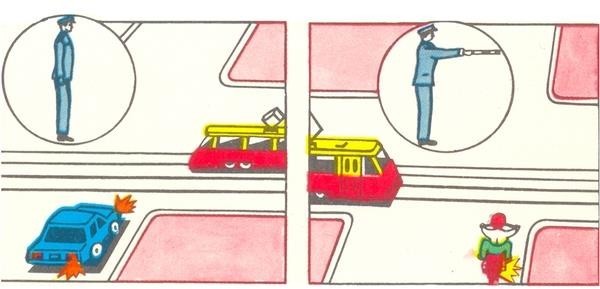
- Left picture.
- Right picture.
The correct answer: Left picture.
Is the tram driver obliged to yield to vehicles approaching from other directions when the traffic light is green?
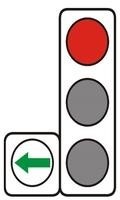
- Yes, obliged.
- Not obliged.
The correct answer: Yes, obliged.
This traffic light is used to regulate traffic

- Across the entire width of the roadway.
- In those lanes where the traffic direction can be changed to opposite.
- Only in lanes designated for general use transport.
The correct answer: In those lanes where the traffic direction can be changed to opposite.
If the regulator’s right hand is extended forward, then traffic of non-rail vehicles from his left side is allowed
- In all directions.
- Only to the left.
The correct answer: In all directions.
Which vehicles are allowed to move on this traffic light signal?
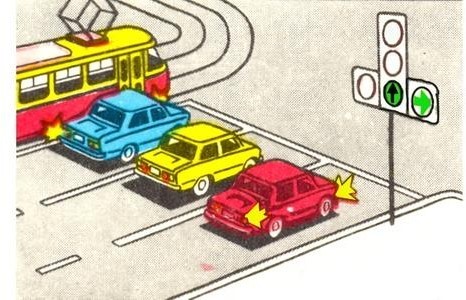
- Tram, yellow, and red cars.
- Yellow and red cars.
- All vehicles.
The correct answer: Yellow and red cars.
Traffic is allowed:
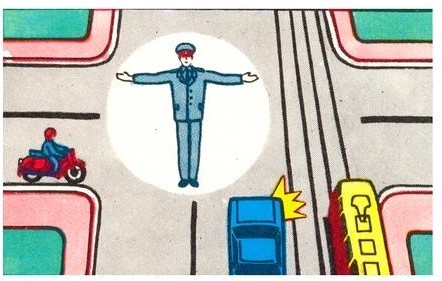
- To all vehicles.
- To the motorcycle.
- To the car and motorcycle.
The correct answer: To the motorcycle.
If the traffic controller’s hands are extended sideways or lowered, then non-rail vehicles from his left and right sides are allowed to move:
- Straight and to the right.
- Only straight.
The correct answer: Straight and to the right.
Which vehicle driver has priority in traffic?
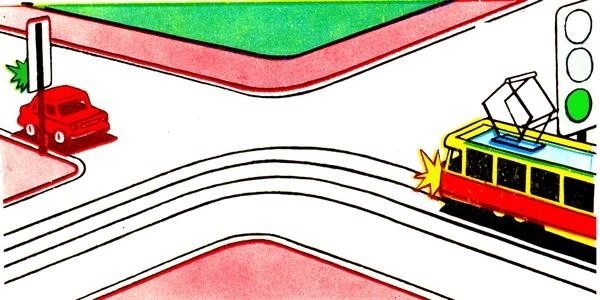
- The car driver.
- The tram driver.
The correct answer: The tram driver.
Traffic is prohibited for:
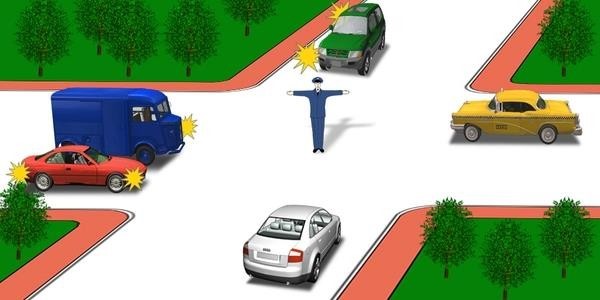
- Green and white cars.
- White, blue, and green cars.
- White and yellow cars.
- Green and yellow cars.
The correct answer: White, blue, and green cars.
When this traffic light shows a red signal, traffic is prohibited:
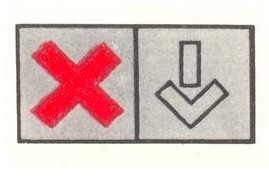
- Across the entire width of the roadway.
- At a speed not exceeding 50 km/h.
- In the lane over which it is positioned.
The correct answer: In the lane over which it is positioned.
What does the round green flashing signal of the traffic light mean?
- It indicates that entry to the intersection is prohibited.
- It permits traffic and indicates that its duration is ending soon and will soon be replaced by a prohibitory signal.
The correct answer: It permits traffic and indicates that its duration is ending soon and will soon be replaced by a prohibitory signal.
The vehicles will cross the intersection in the following order:
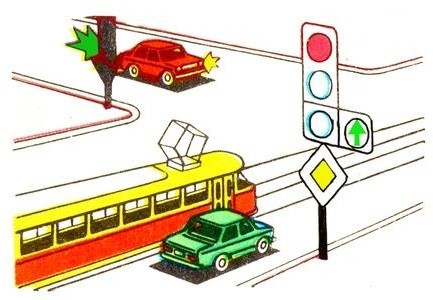
- The tram, the red car, the green car.
- The red car, the tram and the green car simultaneously.
- The tram and the green car simultaneously, then the red car.
The correct answer: The red car, the tram and the green car simultaneously.
Which answer correctly indicates the vehicles allowed to proceed?
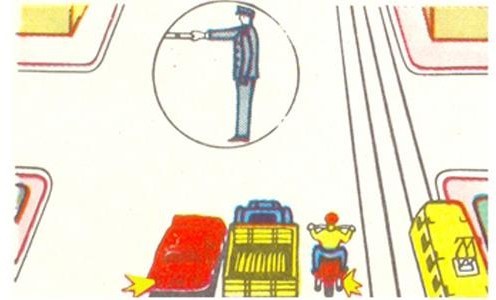
- The cars and the motorcycle.
- All vehicles.
- The cars and the tram.
The correct answer: The cars and the motorcycle.
If the traffic controller’s right hand is extended forward, then non-rail vehicles from his left side are allowed to move:
- Straight and to the left.
- In all directions.
The correct answer: In all directions.
Traffic is prohibited:
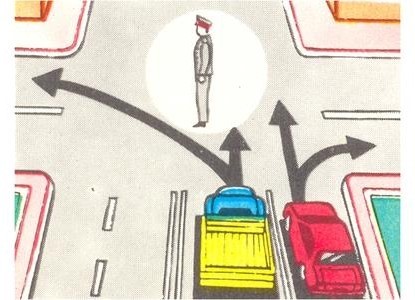
- To the blue-yellow car turning left.
- To the blue-yellow car going straight, and the red car going straight and turning right.
- To the red car.
The correct answer: To the blue-yellow car turning left.
In which direction is traffic allowed?
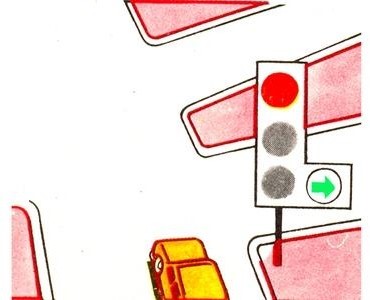
- Straight and to the right via the first lane.
- To the right via the first lane.
- To the right via the second lane.
- To the right via the first and second lanes.
The correct answer: To the right via the first lane.
Who will cross the intersection first?
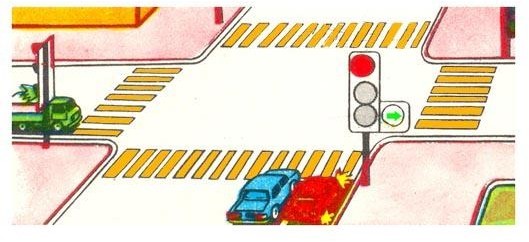
- The red car.
- The blue car.
- The green car.
The correct answer: The green car.
In which picture is the driver making the correct turn?
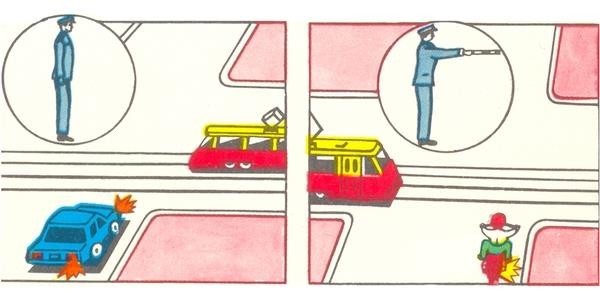
- In the left picture.
- In the right picture.
- In both pictures.
The correct answer: In the left picture.
When will the red car cross the intersection?
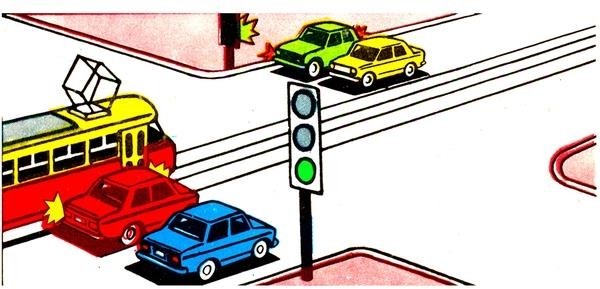
- First.
- Second.
- Third.
- Last.
The correct answer: Last.
This traffic light is used for:
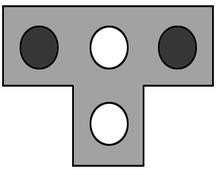
- Controlling the movement of trams and trolleybuses.
- Controlling only tram traffic.
- Controlling the movement of trams and other vehicles using dedicated lanes.
The correct answer: Controlling the movement of trams and other vehicles using dedicated lanes.
When will the car cross the intersection?
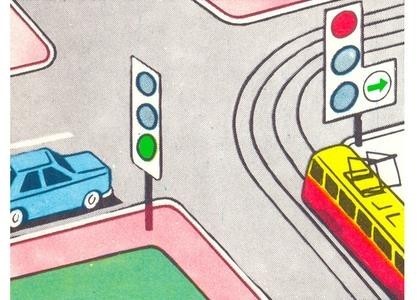
- First.
- Second.
The correct answer: First.
Traffic is allowed for:
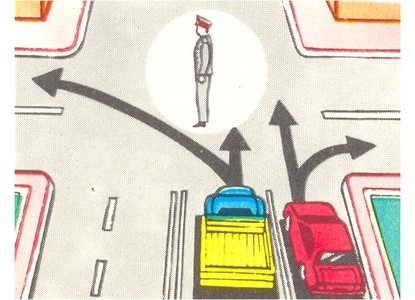
- The blue-yellow car going straight, and the red car going right.
- The red car going straight and right, and the blue-yellow car going straight.
- Both cars only going straight.
The correct answer: The red car going straight and right, and the blue-yellow car going straight.
Traffic is allowed for:
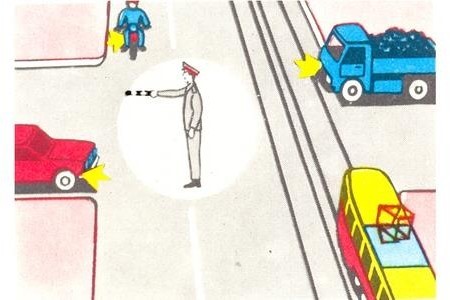
- The red car.
- The motorcycle.
- The tram and the red car.
- The tram.
- The blue car.
The correct answer: The red car.
Is it allowed to drive along the marked path when the reversible traffic lights are turned off?
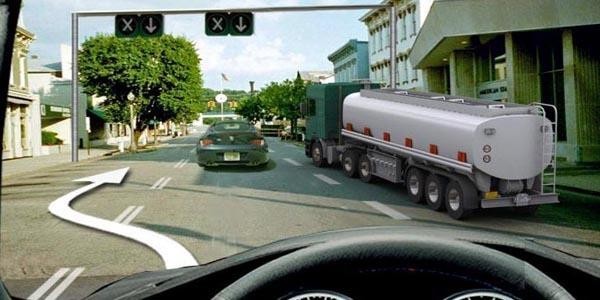
- Allowed.
- Allowed only for overtaking purposes.
- Not allowed.
- Allowed if there is no oncoming traffic.
The correct answer: Not allowed.
In this situation, which vehicles have the right to continue moving?
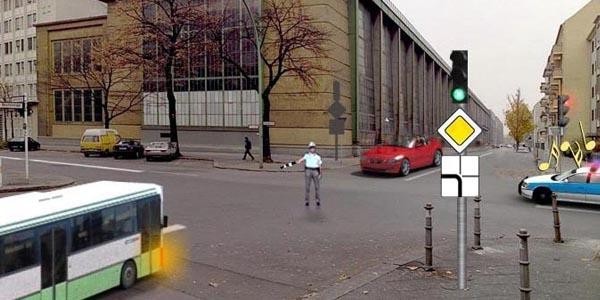
- Passenger car: straight ahead, police car: in all directions, bus: only to the right.
- Only the police car: in all directions.
- Police car: in all directions, bus: only to the right.
The correct answer: Police car: in all directions, bus: only to the right.
What does the traffic light signal indicate?
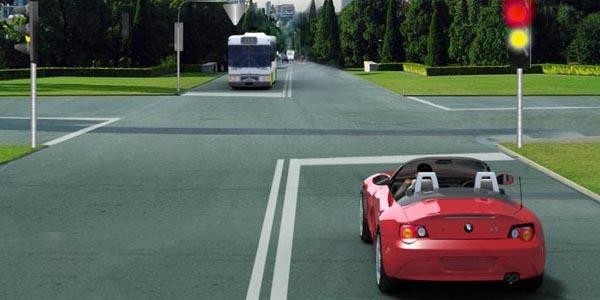
- The traffic light is malfunctioning.
- When crossing the intersection, drivers should follow the road sign requirements.
- Drivers must wait for the traffic light's permissive signal.
The correct answer: Drivers must wait for the traffic light's permissive signal.
Is the driver of the passenger car allowed to overtake the bus when the alternating traffic light is off?
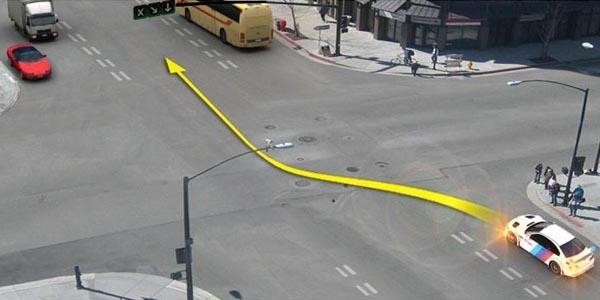
- Allowed.
- Allowed if the bus is moving at 30 km/h.
- Allowed if there are no oncoming vehicles.
- Prohibited.
The correct answer: Prohibited.
Which vehicle must yield the right of way?
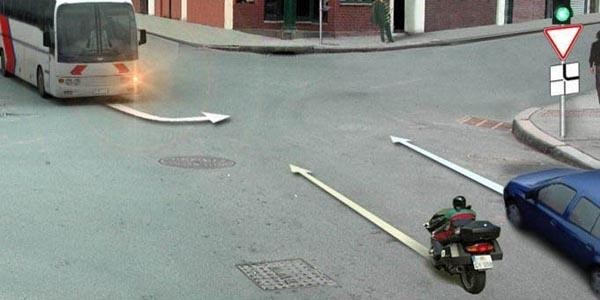
- The bus.
- The motorcycle and the passenger car.
The correct answer: The bus.
The vehicles with the indicated routes have the right to continue driving:
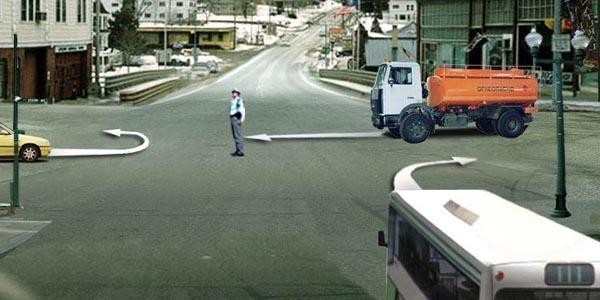
- The truck driver.
- The drivers of the bus and trucks.
- Allowed if there are no oncoming vehicles.
- The bus driver.
The correct answer: The bus driver.
Vehicles will cross the intersection in the following order:
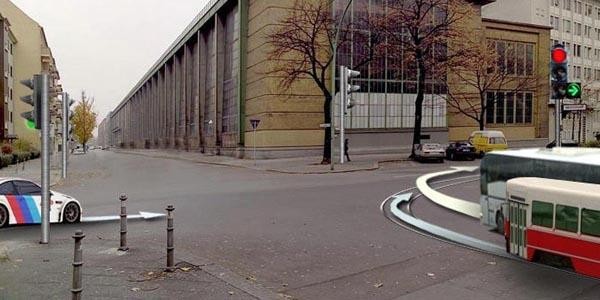
- Tram, passenger car, bus.
- Passenger car, tram, bus.
- Passenger car, bus, tram.
The correct answer: Passenger car, tram, bus.
In this situation, does the bus driver have the right to proceed straight ahead?
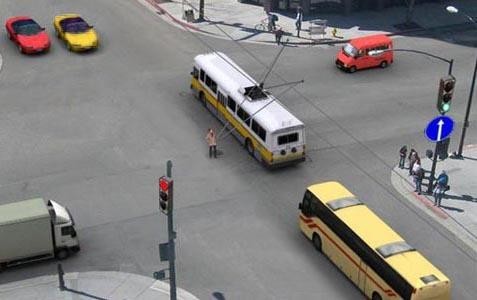
- Yes.
- No.
- Yes, if he is driving on a designated route.
The correct answer: No.
In which direction can the driver continue driving?
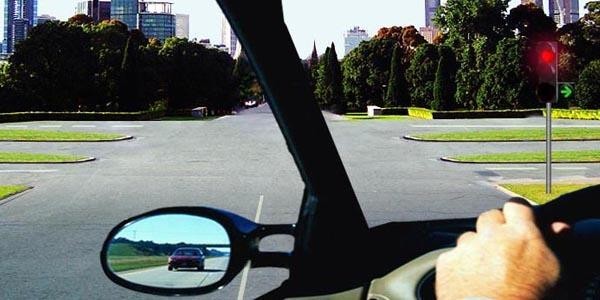
- To the right: first lane.
- To the right: first and second lanes.
- To the left: first lane.
The correct answer: To the right: first lane.
When making a right turn, the driver must yield the way to:
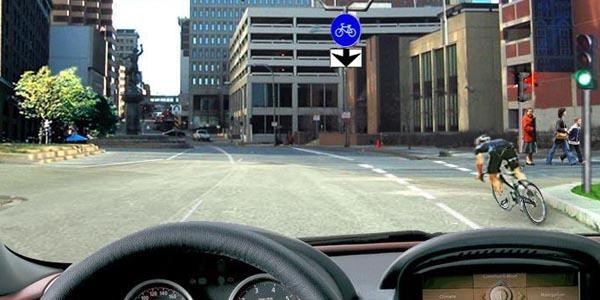
- Only the cyclist.
- Only the pedestrian.
- Both the pedestrian and the cyclist.
- May continue driving without stopping.
The correct answer: Both the pedestrian and the cyclist.
Vehicles will cross the intersection in the following order:
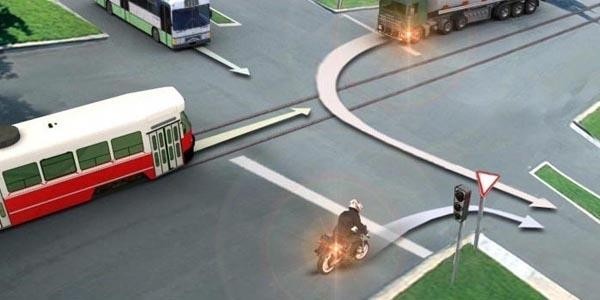
- Tram, bus, truck, motorcycle.
- Bus, truck, tram, motorcycle.
- Bus, tram and motorcycle, truck.
The correct answer: Bus, tram and motorcycle, truck.
In this situation, which tram driver must yield the right of way?
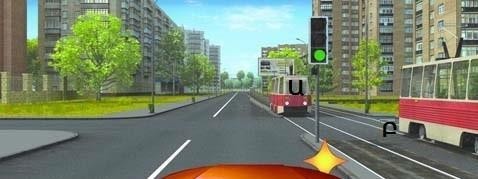
- No one
- Both tram drivers
- Only A
The correct answer: Both tram drivers
Which driver has the priority right of way?
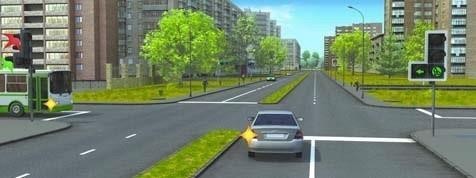
- Bus driver
- Passenger car driver
The correct answer: Passenger car driver
In this situation, when making a left turn
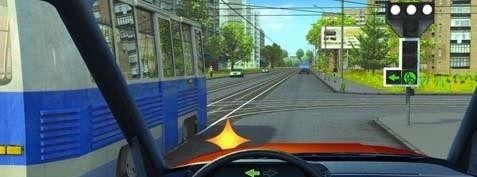
- We will yield to the tram
- I will cross the intersection first
The correct answer: I will cross the intersection first
How to act in this situation
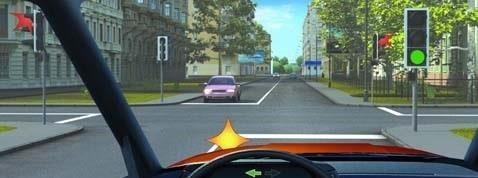
- Enter the intersection and yield to the passenger car driver before crossing the intersection.
- Wait before the "Stop Line" until the passenger car driver crosses the intersection
- Cross first
The correct answer: Enter the intersection and yield to the passenger car driver before crossing the intersection.
Which driver is violating traffic rules when making a turn?
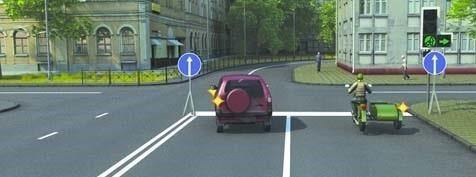
- Passenger car driver
- Motorcycle driver
- Both drivers
- No one
The correct answer: Both drivers
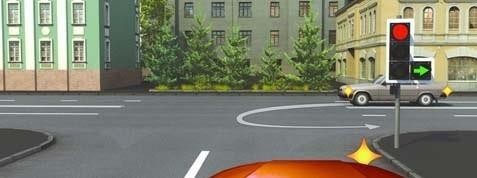
When making a right turn in this situation, is it required to yield?
- Yes, you must
- No, you are not required
The correct answer: Yes, you must
Is a right turn allowed in this situation?
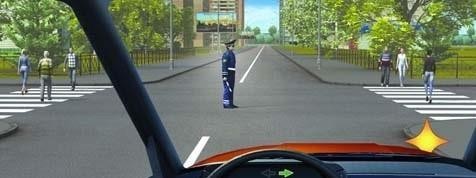
- Yes — without obstructing pedestrians
- No
The correct answer: Yes — without obstructing pedestrians
Must you yield to the tram driver in this situation?
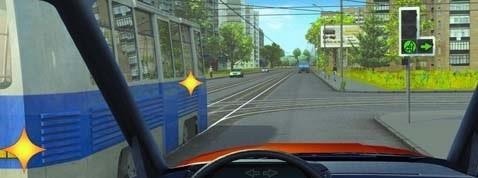
- No, you don't have to
- Yes, you must
The correct answer: Yes, you must
When the green light turns on, the driver
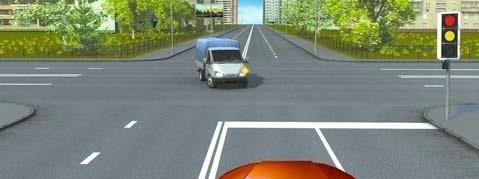
- Must yield to the truck driver
- Has the right of way
The correct answer: Must yield to the truck driver
In this intersection, the driver
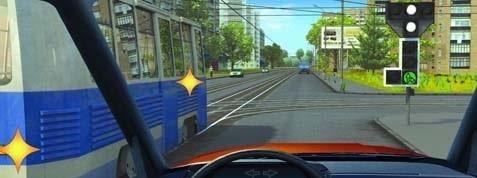
- Will pass first
- Must yield to the tram
The correct answer: Will pass first
When going straight through the intersection, the driver
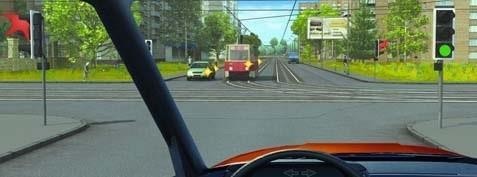
- Can pass first
- Must yield to the tram
- Must yield to both drivers
The correct answer: Must yield to the tram
When making a turn, the driver must yield to
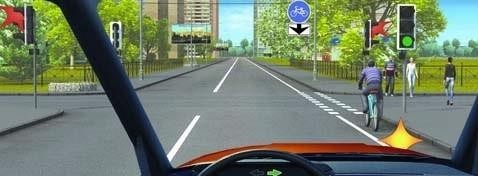
- Only pedestrians
- The cyclist
- The cyclist and pedestrians
The correct answer: The cyclist and pedestrians
When making a right turn, are you required to yield to an oncoming driver?
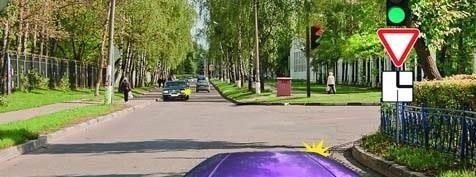
- Yes
- No
The correct answer: No
When crossing the intersection straight ahead
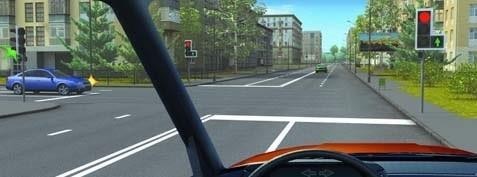
- We can pass first
- We must yield to the driver of the light passenger vehicle
The correct answer: We must yield to the driver of the light passenger vehicle
When making a left turn, you must yield to
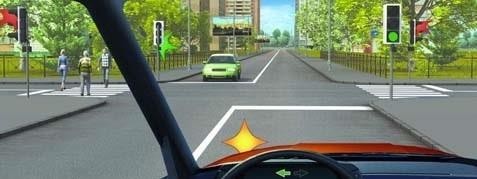
- Only the driver of the light passenger vehicle
- Only pedestrians
- The driver of the light passenger vehicle and pedestrians
The correct answer: The driver of the light passenger vehicle and pedestrians
Is a right turn allowed in this situation?
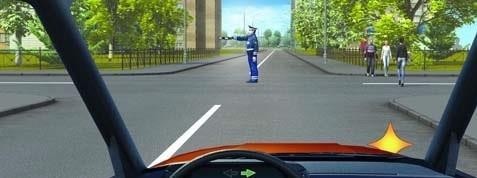
- No
- Yes, without obstructing pedestrians
The correct answer: Yes, without obstructing pedestrians
When making a left turn
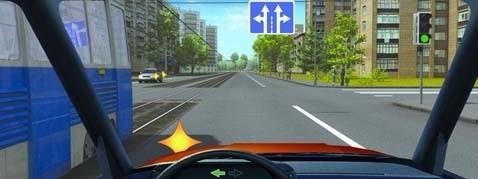
- You must yield to the tram driver
- Pass the intersection first
The correct answer: You must yield to the tram driver
Which traffic signs do not apply when their requirements contradict traffic light signals?
- Priority signs
- Prohibitory signs
- Mandatory signs
- All of the above
The correct answer: Priority signs
In this situation, who must yield the road?
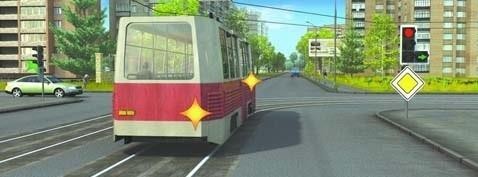
- The driver of the light passenger vehicle
- The tram driver
The correct answer: The tram driver
When making a right turn
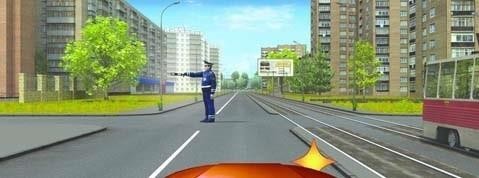
- We must yield to the tram driver
- We will pass the intersection first
The correct answer: We will pass the intersection first
You intend to make a left turn: To whom must you yield?
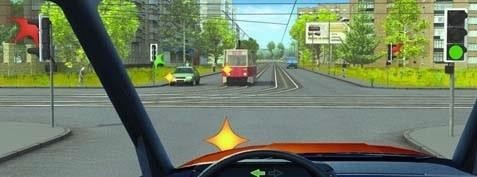
- Only the tram driver
- No one
- The automobile and the tram drivers
The correct answer: The automobile and the tram drivers
When making a left turn
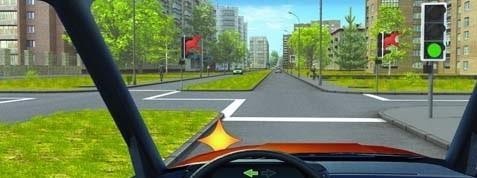
- I will perform the maneuver without stopping.
- After entering the intersection, I will stop before the second "Stop line" and wait for the green signal.
The correct answer: After entering the intersection, I will stop before the second "Stop line" and wait for the green signal.
Are we obligated to yield to the truck driver in this situation?
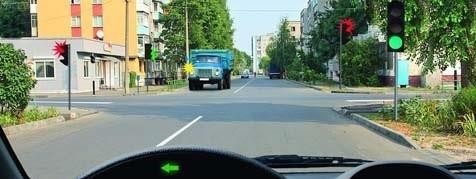
- Yes
- No
The correct answer: Yes
When making a left turn in this situation you must
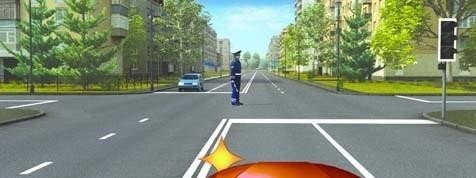
- Enter the intersection and wait for the signal from the traffic controller allowing left turn.
- Stop before the "Stop line" marking and wait for the signal from the traffic controller allowing left turn.
- Exit the intersection and after yielding to the oncoming driver, cross the intersection.
The correct answer: Stop before the "Stop line" marking and wait for the signal from the traffic controller allowing left turn.
In which case can you cross the intersection without yielding to other traffic participants?
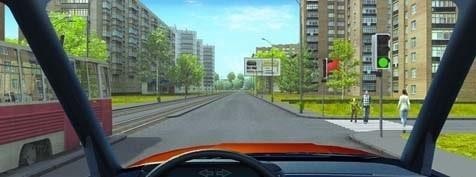
- When going straight
- When making a right turn
- When making a left turn
The correct answer: When going straight
When making a right turn you must
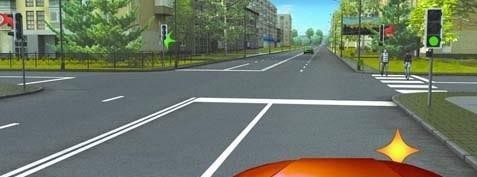
- Stop before the "Stop line" in order not to obstruct pedestrians,
- Stop after entering the intersection in order not to obstruct pedestrians,
- Cross the intersection without stopping
The correct answer: Stop after entering the intersection in order not to obstruct pedestrians,
When making a right turn
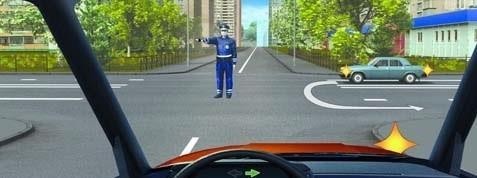
- You must yield to the driver of a light passenger vehicle
- You will cross the intersection first
The correct answer: You will cross the intersection first
After the traffic light turns green, we can enter the intersection
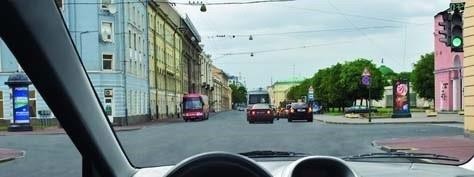
- Only when making a U-turn or turn
- In all cases
The correct answer: Only when making a U-turn or turn
After the green signal lights up, we must
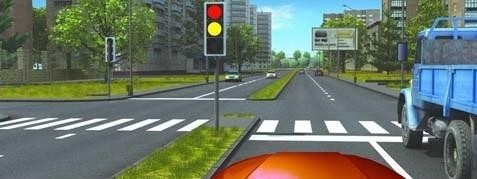
- Make sure there are no pedestrians in the invisible part of the pedestrian crossing who have not finished crossing
- Start moving immediately according to the traffic light signal
The correct answer: Make sure there are no pedestrians in the invisible part of the pedestrian crossing who have not finished crossing
Are you obliged to yield to a bus?
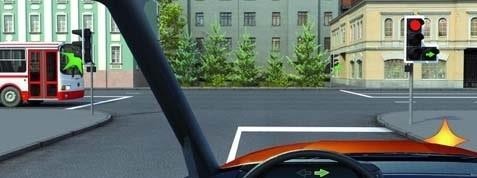
- Yes
- No
The correct answer: Yes
When making a U-turn in this situation, do you have to yield to the other driver?
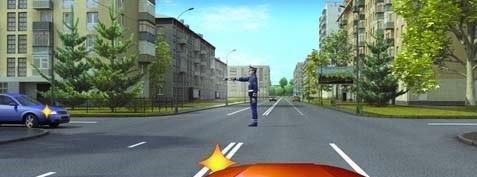
- No, we do not have to
- Yes, we have to
The correct answer: Yes, we have to
From this position, in which direction(s) can the driver continue driving?
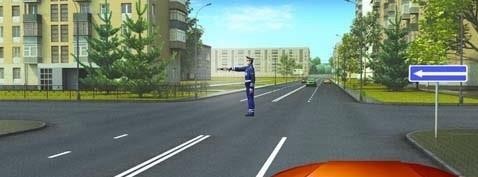
- Straight only
- Straight and right
- Straight and left
- All directions
The correct answer: Straight only
Which driver can continue driving?
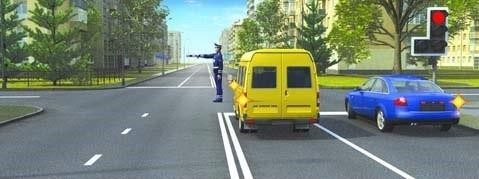
- None
- Only the bus driver
- Both drivers
The correct answer: Both drivers
Crossing the dashed line
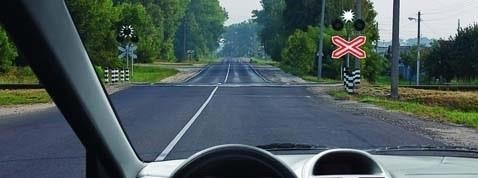
- Allowed
- Forbidden
The correct answer: Allowed
Where should you stop obeying the traffic light signal?
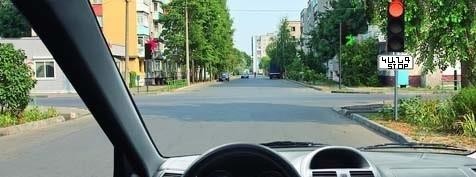
- In front of the traffic light
- In front of the crosswalk
- Anywhere
The correct answer: In front of the traffic light
Making a left turn is allowed
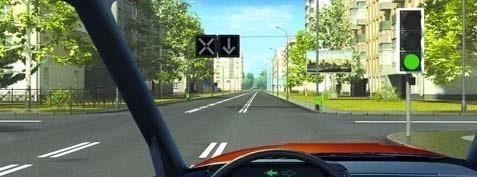
- From the turning lane
- From the lane shown in the picture
The correct answer: From the lane shown in the picture
Driving is allowed
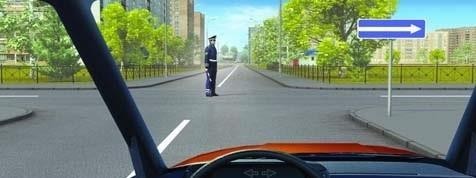
- Only straight
- Only right
- Straight and right
The correct answer: Straight and right
Driving is allowed
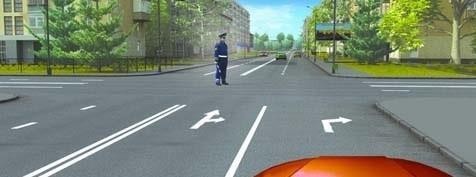
- Straight and right
- Only straight
- Only right
The correct answer: Only right
The arrows shown on the green traffic light signal indicate
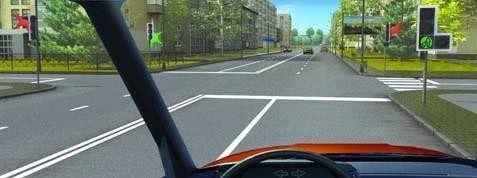
- Right turn is forbidden
- Traffic to the right is regulated by an additional section
The correct answer: Traffic to the right is regulated by an additional section
Is overtaking the truck allowed?
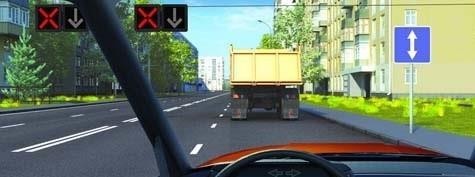
- Yes
- No
The correct answer: No
In which direction can the driver continue in this situation?
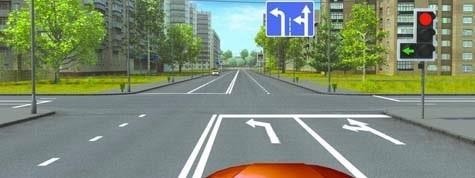
- Only left
- Must wait for the permit signal
- Left and opposite
The correct answer: Left and opposite
Entering the turning lane in this situation
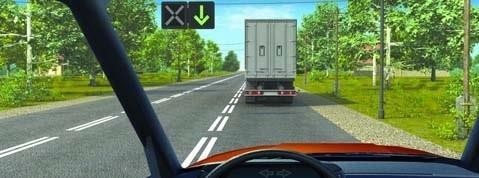
- Allowed
- Allowed only for overtaking
- Forbidden
The correct answer: Allowed
Going straight from the indicated lane
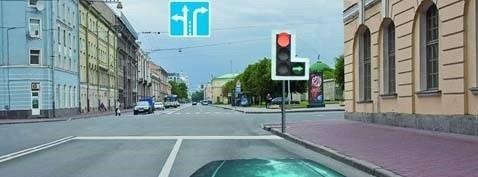
- Allowed
- Allowed only after the main green light appears
- Forbidden
The correct answer: Forbidden
Driving is allowed
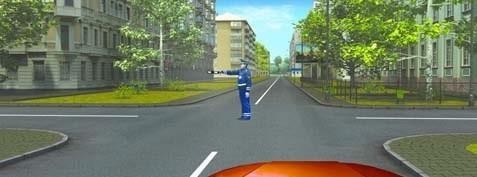
- Straight and right
- Only right
- In all directions
The correct answer: In all directions
In this situation, driving is
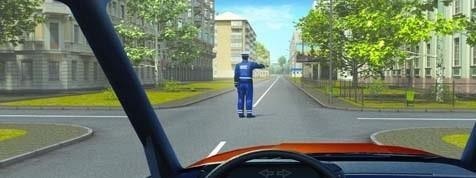
- Allowed
- Forbidden
The correct answer: Forbidden
What does an account add?
All questions and correct answers are accessible without signing up.
- Saved progress and continuation across devices
- A personal plan based on your target date
- Mistake analysis and targeted review
- Voice-guided learning and spoken answers