ROAD MARKINGS, STOP, PARKING
Questions are accessible without an account and load in batches of 20 for faster browsing.
What this topic covers
Questions about road markings, stopping and parking requirements and restrictions.
Questions in the full bank: 134
Available questions: 134
How to study the questions
- Read the question and examine the image, if there is one.
- Choose an answer to see the correct option and any available explanation.
- Continue to the next question, then review your result. In-depth learning is available in your account.
Educational material; not a substitute for the current official rules.
Questions in this topic
Which vehicles are allowed to park?
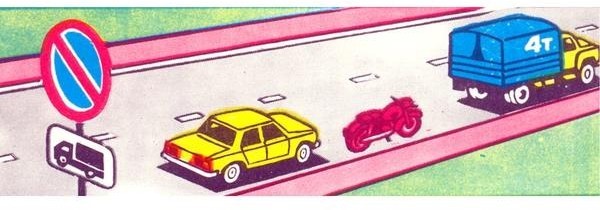
- Only motorcycles.
- Only trucks.
- Only passenger cars.
- Passenger cars and motorcycles.
- All vehicles.
The correct answer: Passenger cars and motorcycles.
The correct answer is “Passenger cars and motorcycles.”. Combine the sign, marking, required distances and remaining road width, while distinguishing stopping from parking. Remember: check the sign, then the distance and free space, and distinguish stopping from parking. In the other choices, the vehicle position or distance fails at least one stopping or parking condition for that location. Only the correct option satisfies the full set of requirements.
Parking is prohibited:
- On bridges, overpasses, and viaducts.
- Under bridges, overpasses, and viaducts.
- In all of the above cases.
The correct answer: In all of the above cases.
The correct answer is “In all of the above cases.”. Combine the sign, marking, required distances and remaining road width, while distinguishing stopping from parking. Remember: check the sign, then the distance and free space, and distinguish stopping from parking.
Is it allowed to drop off a passenger at a place where a continuous yellow line is painted on the curb's upper surface and the "No stopping" sign is installed?
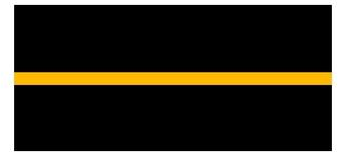
- Allowed.
- Prohibited.
- Allowed if there are no public transport vehicles.
- Allowed only for public transport vehicles.
The correct answer: Prohibited.
The correct answer is “Prohibited.”. Combine the sign, marking, required distances and remaining road width, while distinguishing stopping from parking. Remember: check the sign, then the distance and free space, and distinguish stopping from parking. In the other choices, the vehicle position or distance fails at least one stopping or parking condition for that location. Only the correct option satisfies the full set of requirements.
Does a prohibitory sign affect the part of the road where the driver has stopped?
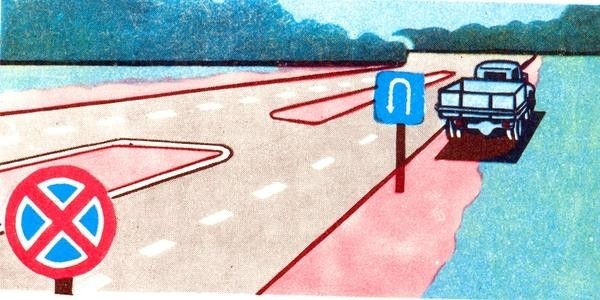
- It affects.
- It does not affect.
The correct answer: It affects.
The correct answer is “It affects.”. Combine the sign, marking, required distances and remaining road width, while distinguishing stopping from parking. Remember: check the sign, then the distance and free space, and distinguish stopping from parking. In the other choices, the vehicle position or distance fails at least one stopping or parking condition for that location. Only the correct option satisfies the full set of requirements.
Is parking allowed at the indicated location?
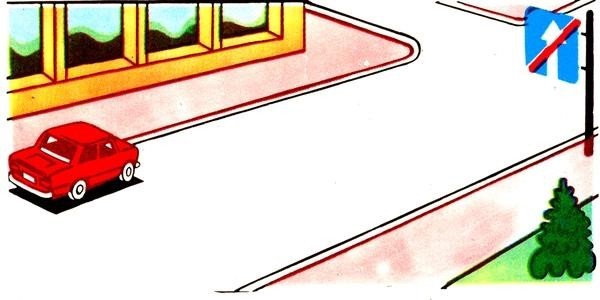
- Allowed.
- Prohibited.
The correct answer: Allowed.
The correct answer is “Allowed.”. Combine the sign, marking, required distances and remaining road width, while distinguishing stopping from parking. Remember: check the sign, then the distance and free space, and distinguish stopping from parking. In the other choices, the vehicle position or distance fails at least one stopping or parking condition for that location. Only the correct option satisfies the full set of requirements.
At what distance from railway crossings is parking prohibited?
- 300 m.
- 150 m.
- 100 m.
- 50 m.
- 25 m.
The correct answer: 25 m.
Is stopping allowed in this case to drop off a passenger?
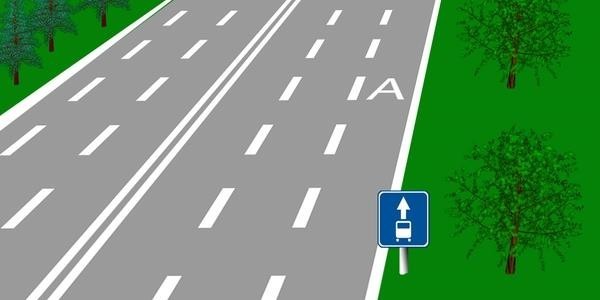
- Allowed if it does not obstruct the movement of public vehicles.
- Prohibited.
The correct answer: Allowed if it does not obstruct the movement of public vehicles.
Which driver is required to stop?
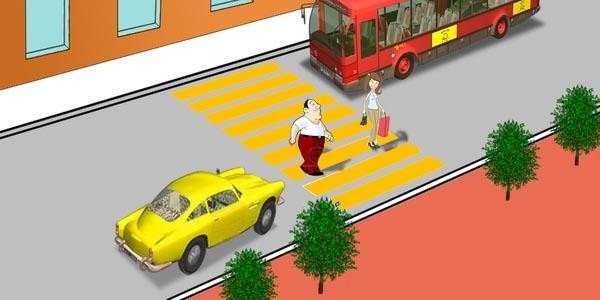
- Passenger car driver.
- Bus driver.
- Both drivers.
The correct answer: Passenger car driver.
The given road marking allows driving:
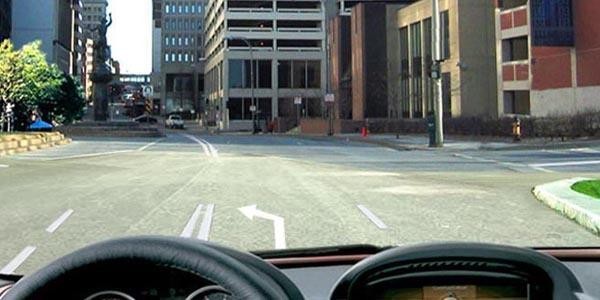
- Only to the left.
- To the left and opposite direction.
- Only opposite direction.
- Straight, left, and opposite direction.
The correct answer: To the left and opposite direction.
Which vehicles are allowed to park within the area affected by this traffic sign?
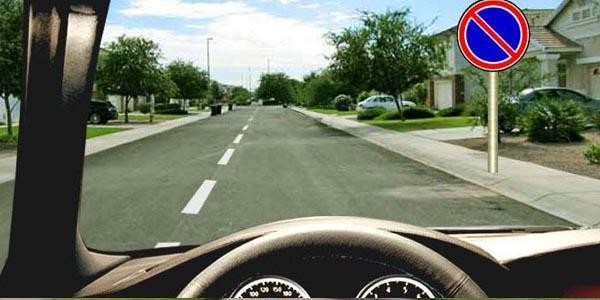
- Only general-use vehicles.
- Vehicles driven by disabled persons and taxis with a meter connected.
The correct answer: Vehicles driven by disabled persons and taxis with a meter connected.
What does this road marking mean?
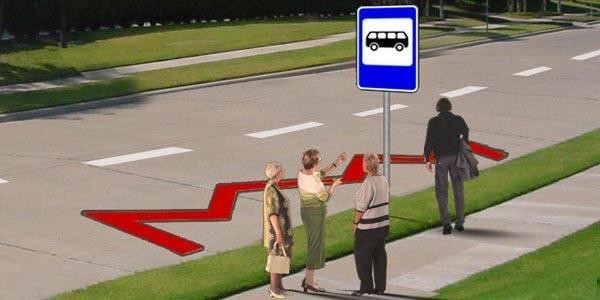
- Place for passengers to get on and off.
- Stop point for general-use vehicles.
- Stop and parking place for general-use vehicles and taxis.
The correct answer: Stop point for general-use vehicles.
What does the solid yellow horizontal line indicate?
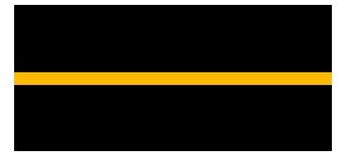
- A place where stopping and parking vehicles is prohibited.
- A place where stopping is allowed to let passengers off or to unload the vehicle.
- A place where parking vehicles is prohibited.
The correct answer: A place where stopping and parking vehicles is prohibited.
Is the driver allowed to cross the solid line marking the boundaries of vehicle parking areas?
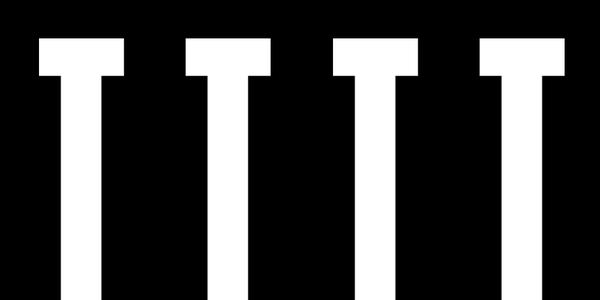
- Not allowed.
- Allowed.
The correct answer: Allowed.
In which directions indicated by the arrows is traffic allowed?
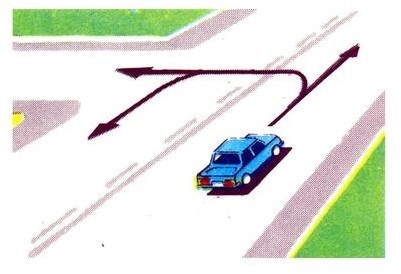
- Only straight ahead.
- To the left and in the opposite direction.
- Straight ahead, to the left, and in the opposite direction.
The correct answer: Only straight ahead.
What does this marking indicate?

- Pedestrian crossing where traffic is regulated by a traffic light.
- The place where the bicycle lane crosses the roadway.
- The place where the pedestrian lane crosses the roadway.
The correct answer: The place where the bicycle lane crosses the roadway.
How many lanes does a road have where opposing traffic flows are separated by double solid lines?
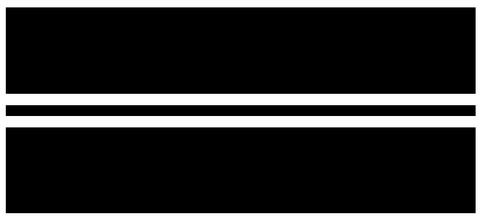
- Two lanes.
- Two or three lanes.
- Three lanes.
- Four or more lanes.
The correct answer: Four or more lanes.
What do the arrows marked on the roadway warn about?
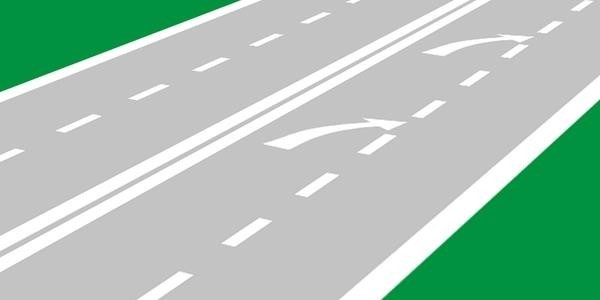
- Warn the driver about approaching a dangerous section of the road.
- Warn about approaching the end of the traffic lane.
- Indicate the direction of a dangerous curve in the road.
The correct answer: Warn about approaching the end of the traffic lane.
Which of these lines is used to mark reversible traffic lanes?
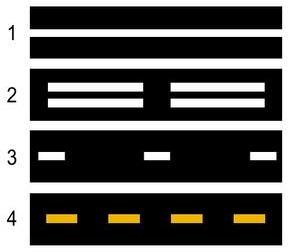
- 1st line.
- 2nd line.
- 3rd line.
- 2nd and 3rd lines.
- 3rd and 4th lines.
The correct answer: 2nd line.
Where is the solid yellow line marking places where stopping and parking are prohibited drawn?
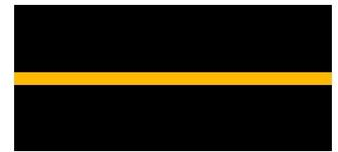
- On the roadway.
- Near the edge of the roadway.
- Near the edge of the roadway or on the upper surface of the curb.
- Only on the upper surface of the curb.
The correct answer: Near the edge of the roadway or on the upper surface of the curb.
With which of the road signs can the yellow broken line marking be used?
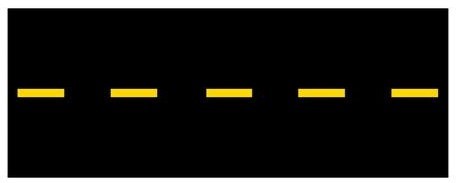
- "Stop is prohibited".
- "Parking is prohibited".
- "Parking is prohibited on odd days of the month".
The correct answer: "Parking is prohibited".
Which vehicles are allowed to drive in the right lane of the carriageway?
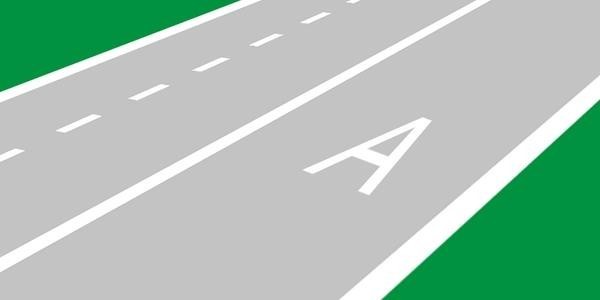
- All motor vehicles.
- Public use vehicles and taxis.
- Only bicycles.
- Only public use vehicles.
The correct answer: Only public use vehicles.
What does this road marking mean?
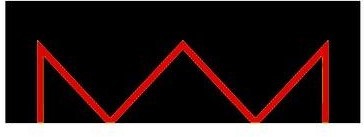
- Indicates sidewalk parking places where the forms of stopping motor vehicles are specified.
- Indicates places where stopping motor vehicles is prohibited.
- Indicates stops for public use vehicles and taxi parking spots.
The correct answer: Indicates stops for public use vehicles and taxi parking spots.
This horizontal road marking shows:
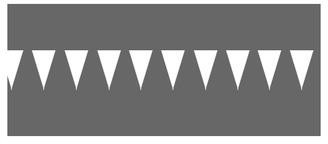
- Narrowing of the carriageway where the number of traffic lanes in that direction decreases.
- The place where the driver must stop if necessary to yield to vehicles on the intersecting road.
- Approach to a no stopping zone.
The correct answer: The place where the driver must stop if necessary to yield to vehicles on the intersecting road.
Is it allowed to enter a guidance island marked with wide white lines?
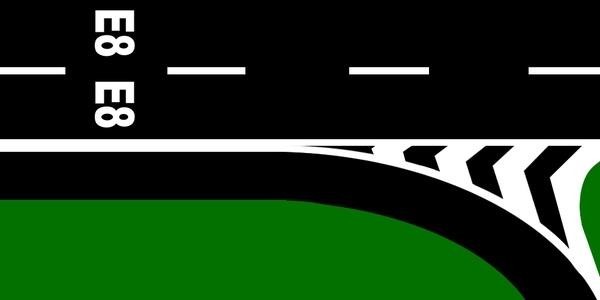
- Allowed only for stopping.
- Allowed during reversing.
- Prohibited.
The correct answer: Prohibited.
How should the driver behave when approaching an intersection with a "Stop line" marking and a green traffic light?
- Stop near the "Stop line", then resume driving.
- Continue driving through the intersection without stopping.
The correct answer: Continue driving through the intersection without stopping.
What does this marking indicate?
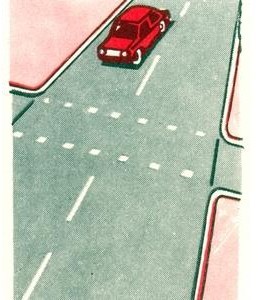
- Pedestrian crossing.
- The place where the bicycle path crosses the carriageway.
- Place designated for driving animals.
The correct answer: The place where the bicycle path crosses the carriageway.
Where should the driver stop the vehicle in the presence of this marking?
- Near the marking.
- On the marking.
- At a distance no less than 5 meters from the marking.
The correct answer: Near the marking.
What does this marking mean?
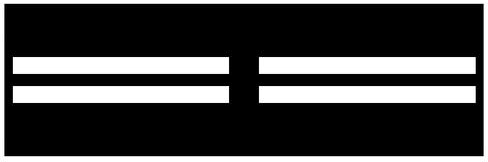
- Traffic lane designated for public use vehicles.
- Traffic lane designated for special purpose vehicles.
- Indicates boundaries of traffic lanes where lane change regulation is implemented.
The correct answer: Indicates boundaries of traffic lanes where lane change regulation is implemented.
Is making a U-turn allowed at the indicated place?
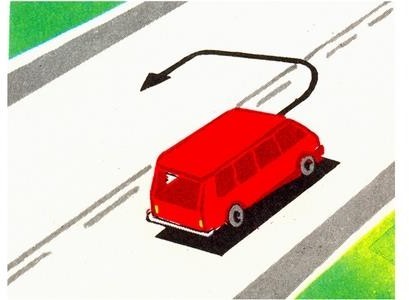
- Allowed.
- Prohibited.
The correct answer: Allowed.
Is it allowed for a bus driver traveling on a tourist route to enter the zone marked with "A" given the presence of the specified marking?
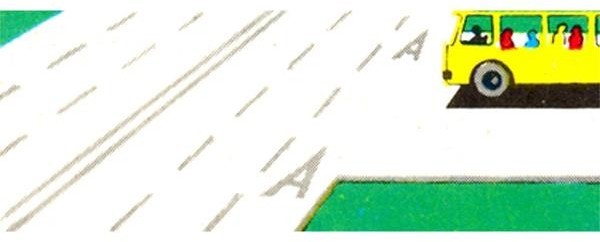
- Allowed.
- Prohibited.
The correct answer: Allowed.
What does the marking in the form of a broken wide line indicate?
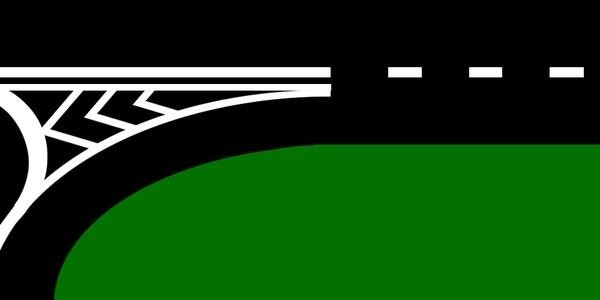
- The boundary between the carriageway and the shoulder.
- The boundary between the main lane of the carriageway and the wandering (or parking) lane.
- The boundary between the main lane of the carriageway and the braking lane.
The correct answer: The boundary between the main lane of the carriageway and the wandering (or parking) lane.
Which vehicle is allowed to stop in the zone covered by these signs?
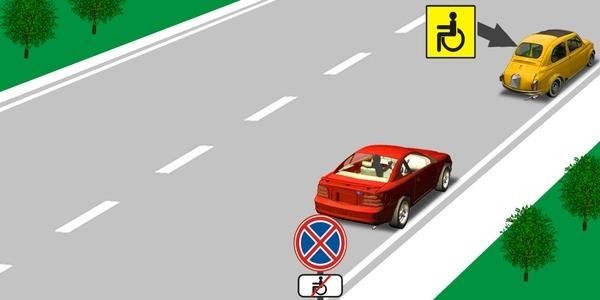
- The red one.
- Both vehicles.
- None.
- The yellow one equipped with a "Disabled" recognition sign.
The correct answer: The yellow one equipped with a "Disabled" recognition sign.
In which picture did the driver correctly stop to let passengers out?
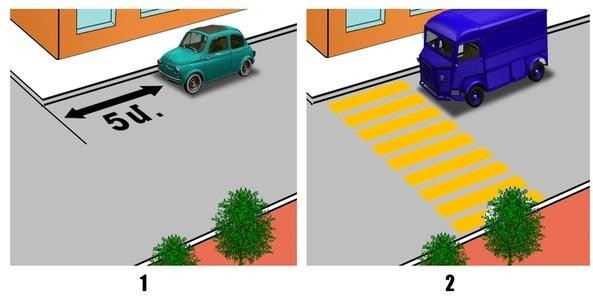
- In the left picture.
- In both pictures.
- In the right picture.
The correct answer: In the left picture.
Which of the following serves as a train stop signal?
- Circular hand motion (during the day with a brightly colored cloth or any highly visible object, at night with a flashlight or lantern).
- The hand raised above the head holding a disc or red flag.
- The hand extended forward.
- The hand extended forward swinging up and down.
The correct answer: Circular hand motion (during the day with a brightly colored cloth or any highly visible object, at night with a flashlight or lantern).
In settlements, on roads with one traffic lane in each direction and no tram tracks in the middle, stopping and parking on the left side of the road is:
- Allowed
- Prohibited
The correct answer: Allowed
At what distance from the "Stop line" or "Stopping prohibited" sign should a vehicle stop to yield the road to an approaching train?
- 1.5 m
- 2.5 m
- 5 m
- 10 m
- Immediately at the "Stop line" and/or the sign.
The correct answer: Immediately at the "Stop line" and/or the sign.
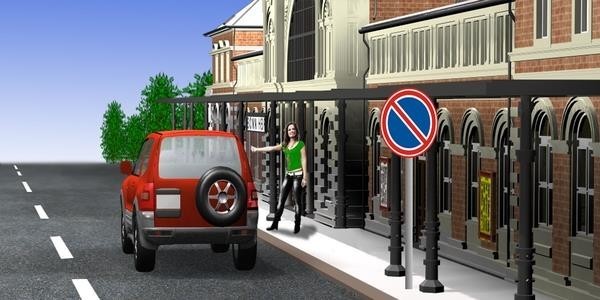
Is stopping allowed in the indicated place?
- Allowed
- Prohibited.
The correct answer: Prohibited.
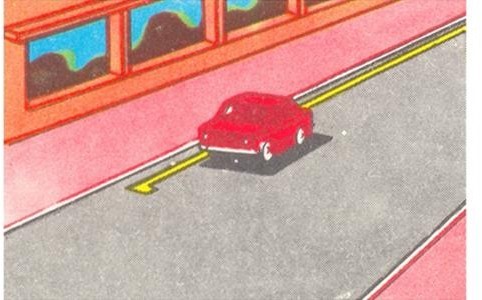
Is it allowed to stop the vehicle at this location?
- Prohibited, because the distance between the broken line marking and the stopped vehicle is less than 3 meters.
- Prohibited on even-numbered days of the month.
- Allowed.
The correct answer: Allowed.
Which vehicle driver violated the parking rules?
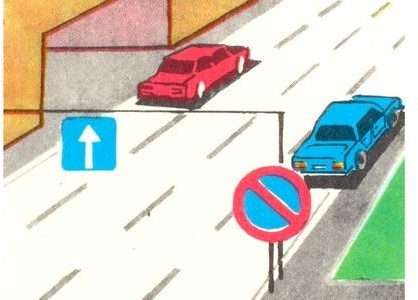
- The driver of the blue vehicle.
- The driver of the red vehicle.
- Both drivers violated.
- Neither driver violated.
The correct answer: Both drivers violated.
Where is it allowed to park for long-term rest, overnight stay, and other purposes outside residential areas?
- On the road shoulders.
- In areas designated for parking or outside the road boundaries.
- On the right side of the traffic lane, without obstructing other vehicles' movement.
- On the left side of the road, ensuring traffic safety.
The correct answer: In areas designated for parking or outside the road boundaries.
Stopping is prohibited if the distance between the solid line and the stopped vehicle is:
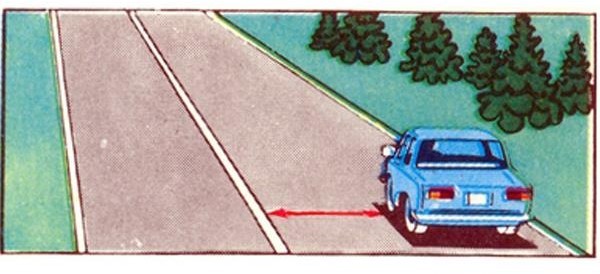
- 6 m.
- 5.5 m.
- 4 m.
- 3.5 m.
- 2.5 m.
The correct answer: 2.5 m.
If traffic is prohibited at a railway crossing and there are no traffic lights, road signs, markings, or barriers, then the driver must stop:
- At no less than 5 meters from the nearest rail.
- At no less than 7 meters from the nearest rail.
- At no less than 10 meters from the nearest rail.
The correct answer: At no less than 10 meters from the nearest rail.
At what distance is parking prohibited near railway crossings?
- 15 m.
- 50 m.
- 100 m.
- 150 m.
The correct answer: 15 m.
Which drivers have violated the listed stopping rules?
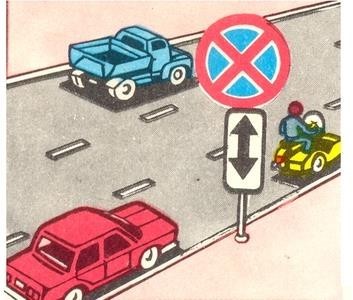
- The drivers of the red car and the motorcycle.
- The driver of the blue car.
- The motorcycle driver.
- All vehicle drivers.
The correct answer: All vehicle drivers.
Which vehicle drivers have made an incorrect stop to let passengers off?
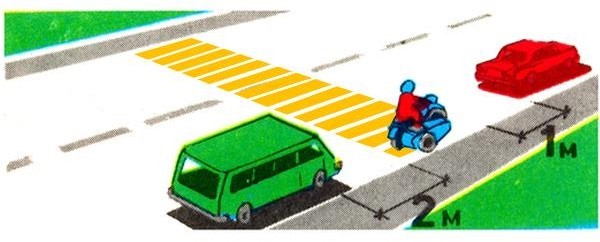
- The driver of the light passenger car.
- The motorcycle driver.
- The bus driver.
- The motorcycle and bus drivers.
- All drivers.
The correct answer: The motorcycle and bus drivers.
If traffic is prohibited at a railway crossing and there are no traffic lights, road signs, or markings, then the driver must stop:
- At no less than 5 meters from the barrier.
- At no less than 3 meters from the barrier.
- Immediately before the barrier.
The correct answer: At no less than 5 meters from the barrier.
Is it allowed for a tourist bus to travel in the lane marked with "A"?
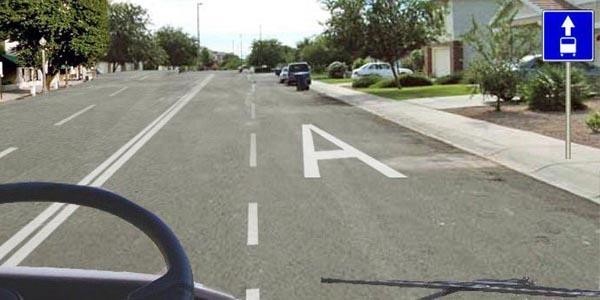
- Not allowed.
- Allowed.
The correct answer: Not allowed.
What does the letter "A" marked on the traffic lane mean?
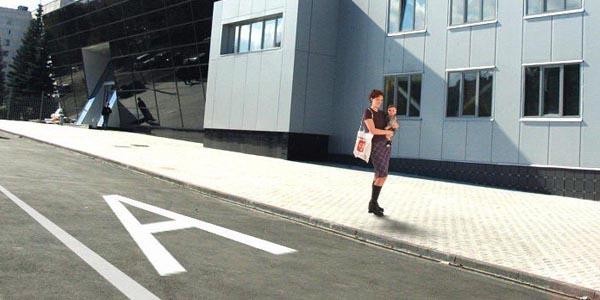
- The road (route) number.
- A special lane designated for general use vehicles.
- A special lane designated for "A" class vehicles.
The correct answer: A special lane designated for general use vehicles.
Is a vehicle allowed to stop at the indicated place to let passengers off?
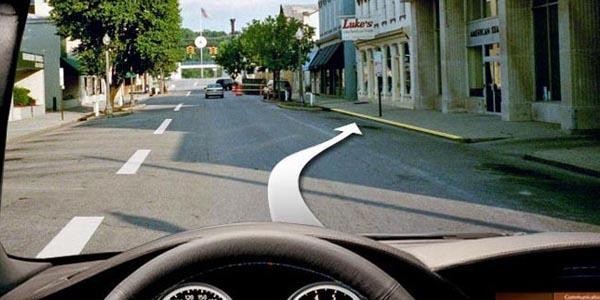
- Allowed.
- Not allowed.
- Allowed, but by mounting the sidewalk.
The correct answer: Not allowed.
Is it allowed to continue driving in the direction indicated by the arrow?
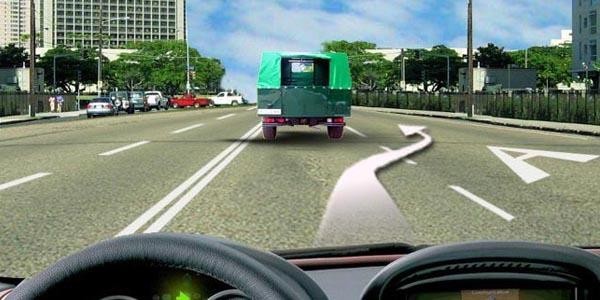
- Not allowed.
- Allowed in all cases.
- Allowed only for stopping to let passengers off.
- Allowed for overtaking a truck.
The correct answer: Allowed only for stopping to let passengers off.
Such vertical markings indicate:
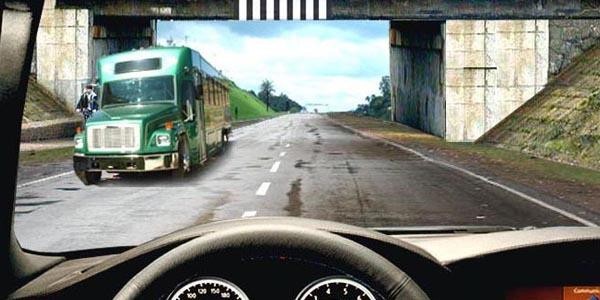
- The lower edges of a bridge or tunnel.
- Entrance to unlit tunnels.
- Any road construction element that poses a danger to traffic.
The correct answer: The lower edges of a bridge or tunnel.
What should the driver of a light passenger vehicle do if the bus driver starts braking?
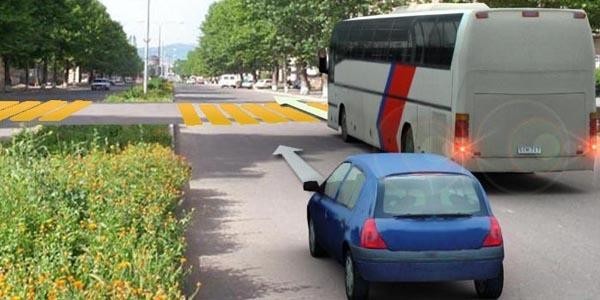
- Continue driving.
- Slow down, stop if necessary, and continue driving only after ensuring there are no pedestrians at the crossing.
- Stop and continue driving only after the bus resumes movement.
The correct answer: Slow down, stop if necessary, and continue driving only after ensuring there are no pedestrians at the crossing.
The bus driver has stopped to pick up passengers. The light vehicle is driving at 70 km/h. Which driver is violating traffic rules?
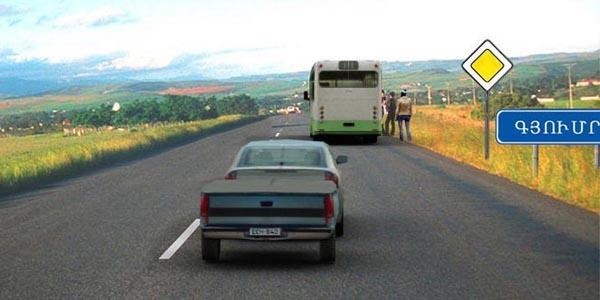
- Neither.
- The bus driver.
- The light vehicle driver.
- Both drivers.
The correct answer: Neither.
In which of the listed cases may a bus driver enter the middle lane of a three-lane road with two-way traffic?
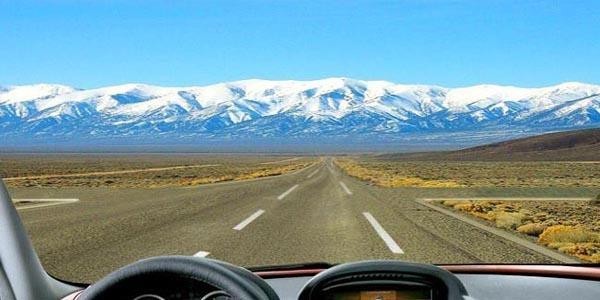
- To overtake or bypass.
- To make a left turn or a U-turn.
- In both of the above cases.
- None of the answers are correct.
The correct answer: In both of the above cases.
Where should the driver stop in this situation?
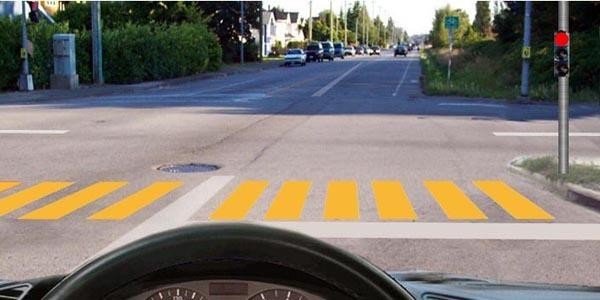
- Stopping is not required.
- In front of the traffic light.
- In front of the “stop line” marking.
- In front of the intersection of traffic lanes.
The correct answer: In front of the “stop line” marking.
The bus has stopped to yield to a pedestrian. Is the light vehicle driver violating traffic rules in this situation?
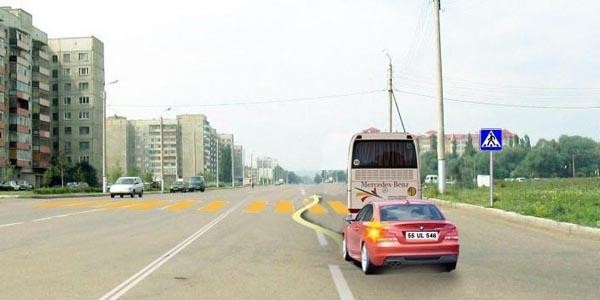
- Yes, violating.
- No, not violating.
The correct answer: Yes, violating.
Where should the bus driver stop to yield to the light vehicle driver before continuing to the left?
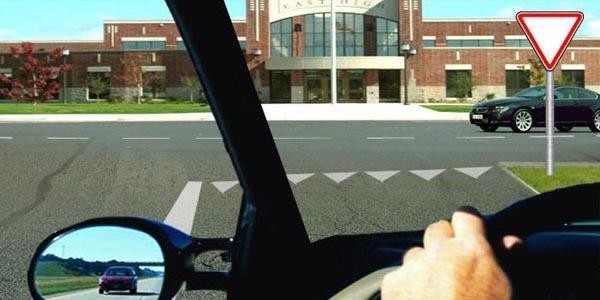
- In front of the road sign.
- Near the road marking.
- At a safe place at the driver’s discretion.
The correct answer: Near the road marking.
Where should you stop in this situation?
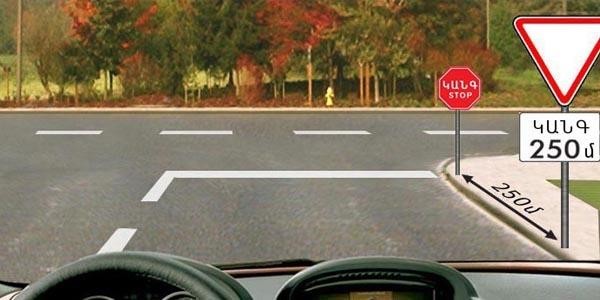
- Near the first road sign.
- In front of the “stop line” marking.
- Near the second road sign.
- Stopping is not required.
The correct answer: In front of the “stop line” marking.
Is the tourist bus driver allowed to stop in the designated area for a long rest?
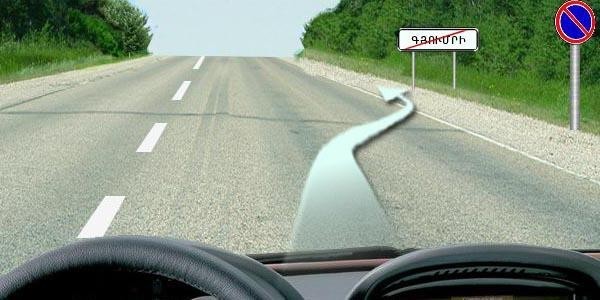
- Not allowed.
- Allowed.
The correct answer: Not allowed.
Is it allowed for a regular passenger bus to stop at the indicated place to pick up passengers?
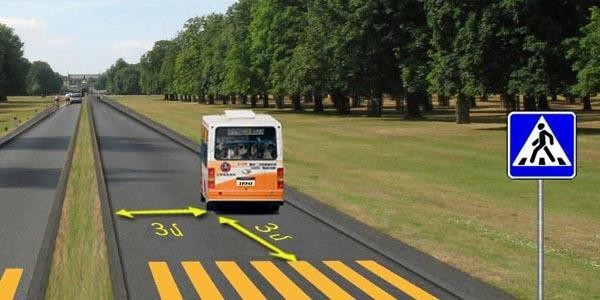
- Not allowed.
- Allowed.
The correct answer: Not allowed.
In the area affected by this sign, which vehicles are allowed to stop?
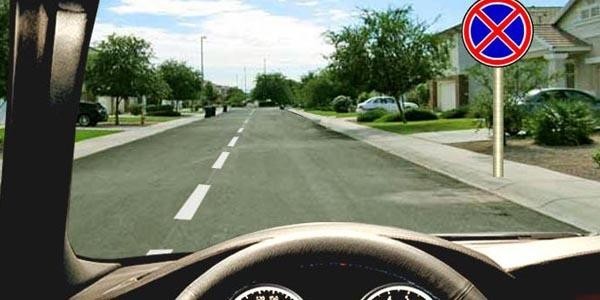
- Only public transport vehicles.
- Only vehicles driven by persons with disabilities.
- Only taxis with an active meter.
- No one is allowed to stop.
The correct answer: No one is allowed to stop.
Is stopping allowed in the area of influence of the indicated road signs for the purpose of boarding or alighting passengers?
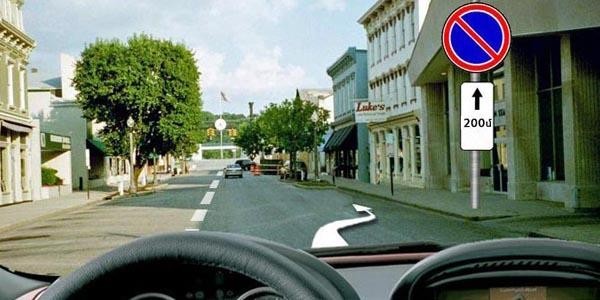
- Allowed.
- Prohibited.
The correct answer: Allowed.
For which vehicles is the lane marked with the letter “A” reserved?
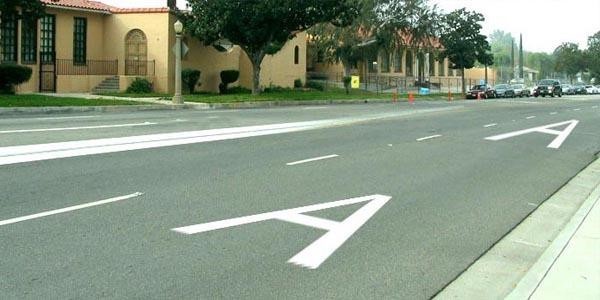
- Only for buses operating on a designated route.
- For trolleybuses and taxis.
- For general use vehicles.
The correct answer: For general use vehicles.
Is it allowed for buses to stop and park on the left side of the traffic lane in settlements on one-way streets?
- Allowed.
- Prohibited.
- Allowed only for stopping.
The correct answer: Allowed.
Is it allowed for general use vehicles to stop outside the designated stop areas?
- Prohibited.
- Allowed.
The correct answer: Prohibited.
Is parking of buses allowed in residential zones and yard areas?
- Prohibited.
- Allowed in designated places.
- Allowed.
The correct answer: Allowed in designated places.
Is stopping allowed in the indicated place?
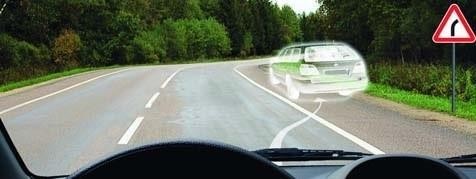
- Yes.
- No.
The correct answer: Yes.
Is parking allowed in this situation?
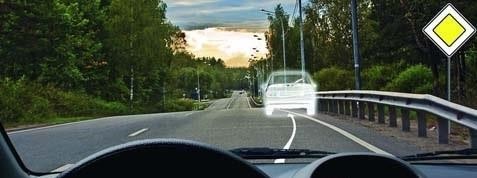
- Yes.
- Only during daylight hours.
- No.
The correct answer: No.
At which of the indicated places is stopping allowed?
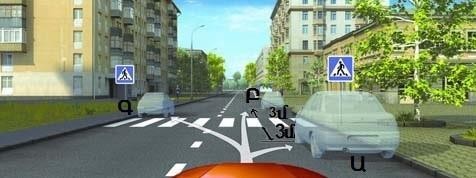
- Only A
- Only B
- Only B and C
- Nowhere
The correct answer: Only B
At which place is stopping allowed?
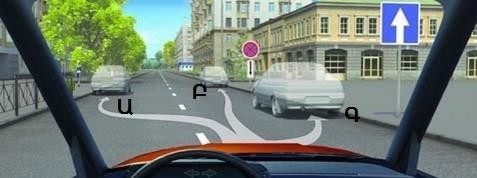
- Only B
- Only A and B
- Only A and C
- Nowhere
The correct answer: Only A and B
Is stopping allowed in the indicated place?
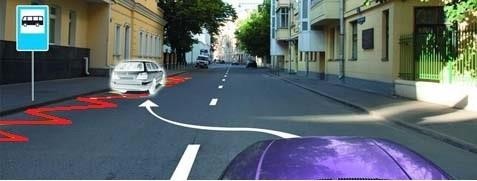
- Yes
- Prohibited
- Only for boarding or alighting passengers
The correct answer: Prohibited
Is stopping allowed for boarding passengers in the indicated situation?
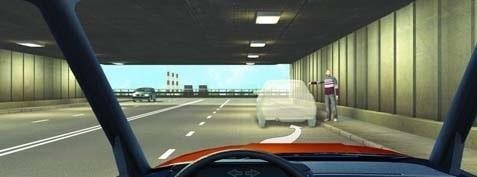
- Yes.
- No.
The correct answer: No.
In which of the indicated cases is stopping allowed?
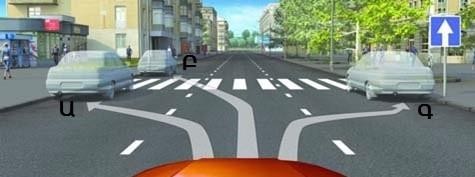
- Only B
- Only C
- A and C
- In all cases
The correct answer: Only B
Stopping is prohibited
- At the railway crossing
- At the railway crossing and within 50m of the crossing
- At the railway crossing and before 50m of the crossing
The correct answer: At the railway crossing
Parking is prohibited
- At the railway crossing
- At the railway crossing and within 50m of the crossing
- At the railway crossing and before 50m of the crossing
The correct answer: At the railway crossing and within 50m of the crossing
In which option is the correctly stopped vehicle indicated?
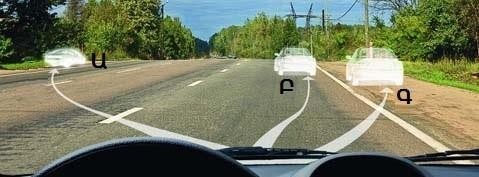
- Only C
- Only A and C
- Only B and C
- All three cases are allowed
The correct answer: Only C
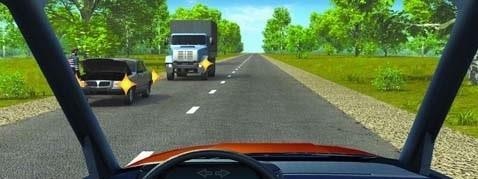
Are you obliged to yield to the truck?
- Yes
- No
The correct answer: No
Stopping at the indicated place
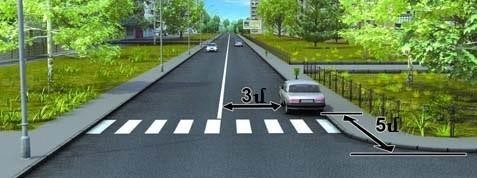
- Is allowed
- Is prohibited
The correct answer: Is allowed
When is crossing the marking allowed?
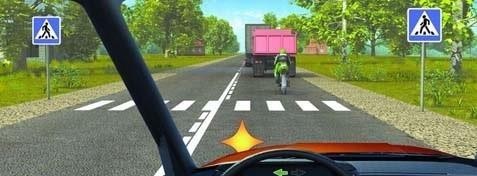
- Before the pedestrian crossing
- After the pedestrian crossing
The correct answer: After the pedestrian crossing
Has the truck driver violated the stopping rules?
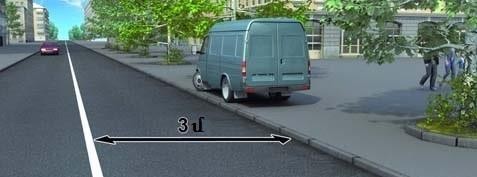
- Yes
- No
The correct answer: Yes
In the indicated situation, is stopping allowed for the purpose of boarding a passenger?
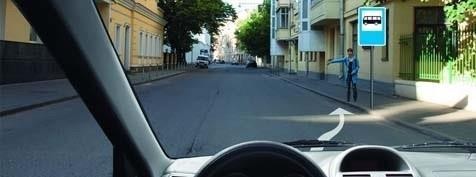
- Yes
- Allowed only for the driver of public transport
- No
The correct answer: Allowed only for the driver of public transport
Which driver has violated the parking rules?
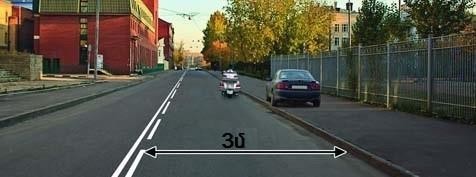
- Both drivers
- Only the passenger car driver
- Only the motorcycle driver
- No one
The correct answer: Only the passenger car driver
In which option is the driver who parked in a prohibited position indicated?
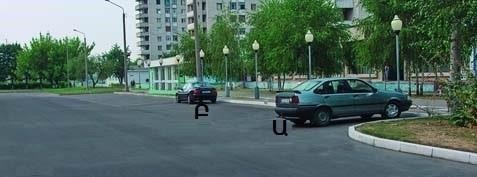
- Only A
- Only B
The correct answer: Only A
In which of the shown places is parking allowed?
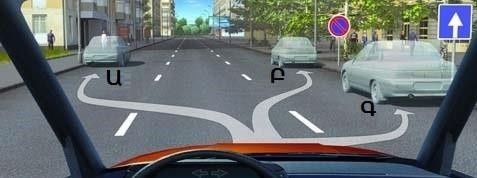
- Only A
- Only C
- A or C
The correct answer: A or C
Is stopping allowed in the indicated place?
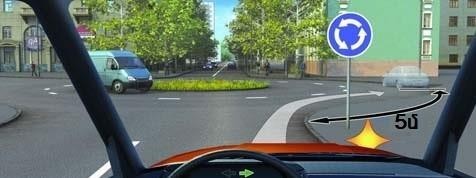
- No
- Yes
The correct answer: No
Who has violated the rules of stopping?
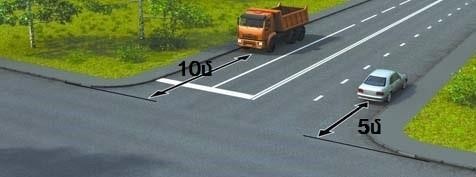
- Both drivers
- Only the truck driver
- Only the light vehicle driver
- No one
The correct answer: Only the truck driver
In which case has the driver violated the rules of stopping?
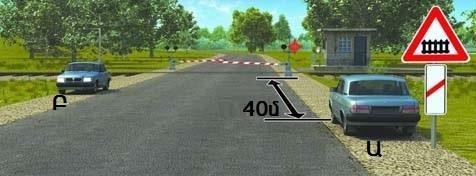
- Only A
- Only B
- No one
- Both have violated
The correct answer: No one
In which case has the driver violated the rules of parking?
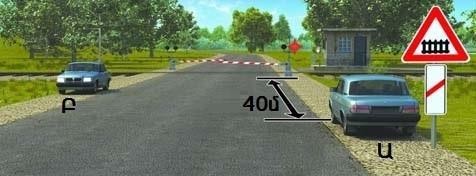
- Only A
- Only B
- Both have violated
- No one
The correct answer: Both have violated
Is parking allowed in the indicated place?
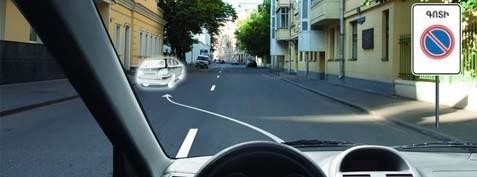
- Not allowed
- Allowed
The correct answer: Not allowed
Is it allowed to stop on a bridge for passenger pick-up?
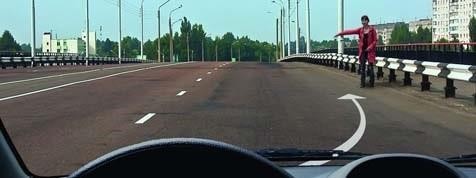
- Yes
- No
The correct answer: No
Which driver has violated the rules of stopping?
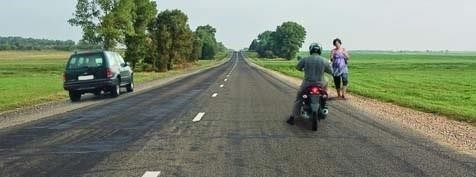
- The car driver
- The motorcycle driver
- Both drivers
- No one
The correct answer: Both drivers
Which driver has correctly performed the stop?
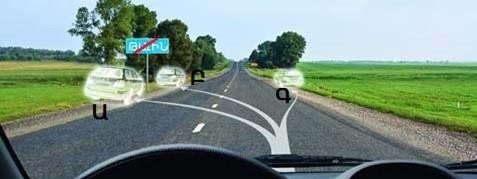
- Only C
- B or C
- All drivers
The correct answer: Only C
Is it allowed to stop in the indicated place?
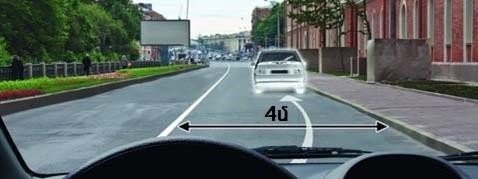
- Yes
- No
The correct answer: No
Which driver has violated the parking rules?
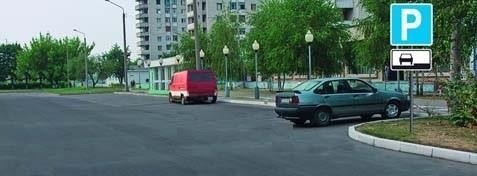
- The truck driver
- The light vehicle driver
- No one
- Both drivers
The correct answer: The light vehicle driver
Is a driver of a light truck (under 3.5 tons) allowed to park as indicated by the sign?
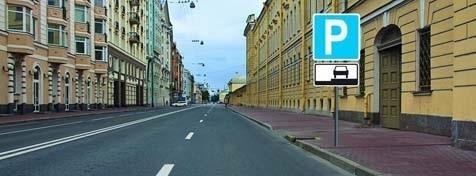
- Yes
- No
The correct answer: No
Is stopping allowed in the indicated place?
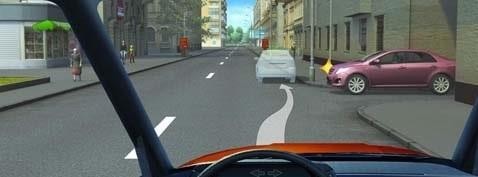
- Yes
- No
The correct answer: No
In which of the indicated places is stopping allowed?
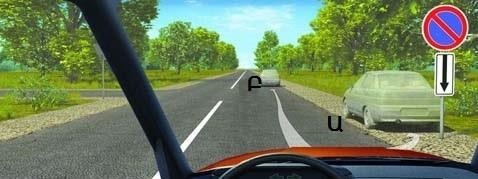
- Only A
- Only B
- Any of them
The correct answer: Only A
Parking in the indicated place is:
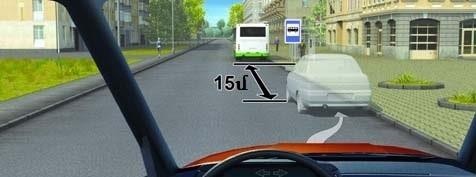
- Allowed
- Prohibited
The correct answer: Allowed
Which driver has violated the parking rules?
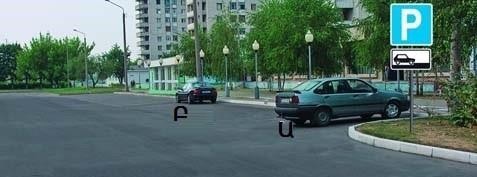
- Only A
- Only B
- No one
The correct answer: Only B
Stopping in the indicated place is:
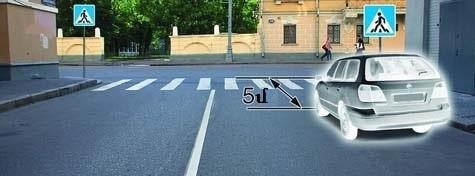
- Allowed
- Allowed for passenger pick-up only
- Prohibited
The correct answer: Prohibited
Which driver has violated the stopping rules?
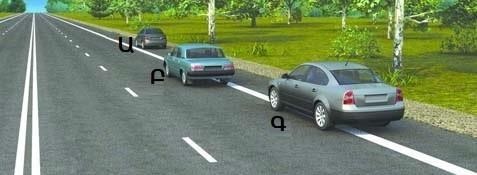
- Only B
- Only B and C
- All of them
The correct answer: Only B and C
Are drivers allowed to stop in the indicated place?
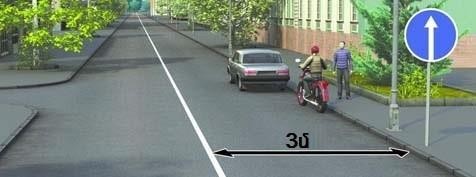
- Yes
- Only the motorcycle driver
- No
The correct answer: No
In which of the following cases is stopping allowed?
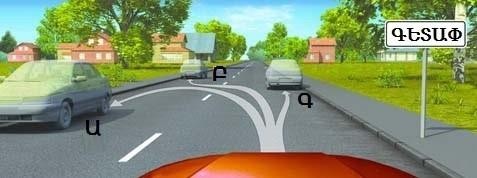
- Only B
- Only B and C
- In all cases
The correct answer: In all cases
Is stopping allowed in the manner the vehicle is positioned?
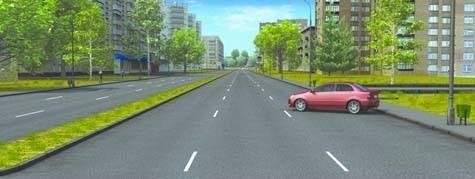
- Yes
- Only for light trucks
- No
The correct answer: No
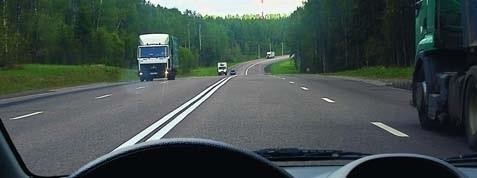
Is it allowed to continue driving in this lane after overtaking a truck?
- Yes
- No
The correct answer: No
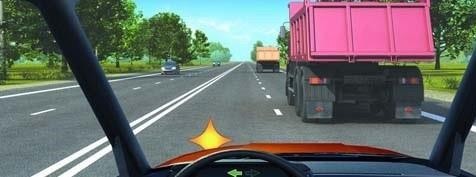
Is it allowed to continue driving in the occupied lane in this situation?
- Yes
- No
The correct answer: Yes
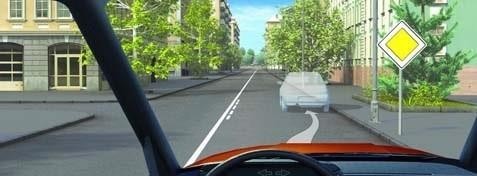
Is stopping allowed at the indicated place?
- Allowed
- Allowed if the distance from the vehicle to the marking is more than 3 meters
- Prohibited
The correct answer: Prohibited
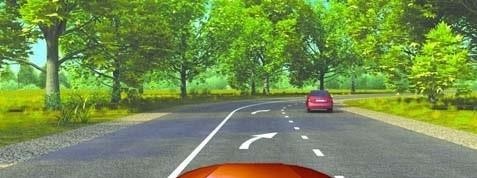
What does this road marking indicate?
- Priority during merging
- Approach to a curve in the road
- Approach to the last lane
The correct answer: Approach to the last lane
What does this sign indicate?
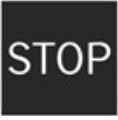
- Approaching a "Stop line" at a controlled intersection
- Approaching the "Stop line" marking when applied with the "No stopping" sign
- Approaching a railroad crossing
The correct answer: Approaching the "Stop line" marking when applied with the "No stopping" sign
Vertical striped markings indicate
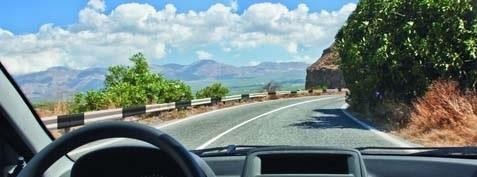
- Approach to a railway crossing
- Approach to a dangerous intersection
- Driving on a dangerous section of the road
The correct answer: Driving on a dangerous section of the road
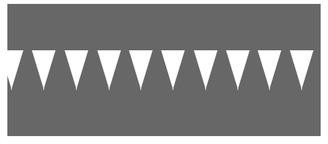
This triangular marking indicates
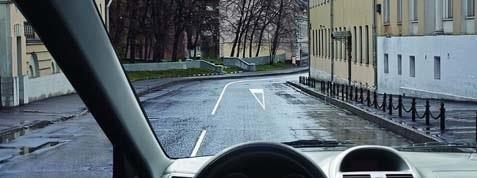
- Approach to a dangerous turn
- Approach to a yield sign
- Approach to a place where vehicles must stop
The correct answer: Approach to a yield sign
These broken line markings in the intersection area indicate
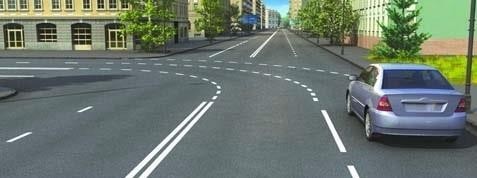
- Allowed directions of traffic
- Traffic lanes within the intersection boundaries
The correct answer: Traffic lanes within the intersection boundaries
This marking allows
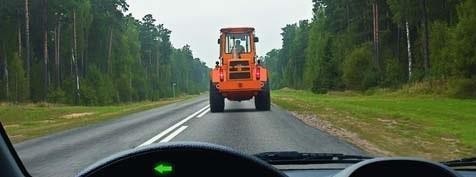
- Overtaking
- Prohibits overtaking
- Allows overtaking only for tractors
The correct answer: Overtaking
This vertical marking
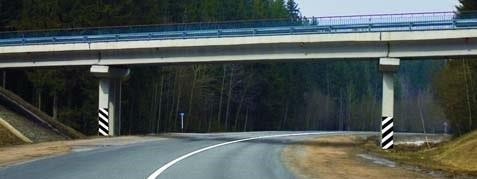
- Indicates all adjacent vertical elements of the roadway
- Indicates only those road structures that pose a danger to drivers
The correct answer: Indicates only those road structures that pose a danger to drivers
Which route does the driver follow without violating marking rules?
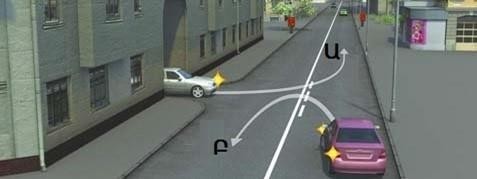
- Only A
- Only B
- Both violate
- Both do not violate
The correct answer: Only B
When is it allowed to cross the solid line marking?
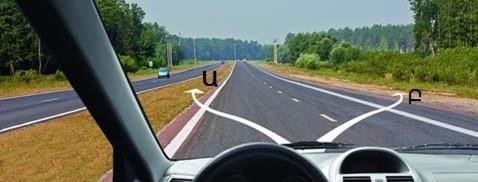
- Only B, when stopping
- Never
- Stopping is allowed in both cases
The correct answer: Only B, when stopping
What does the broken marking indicate?
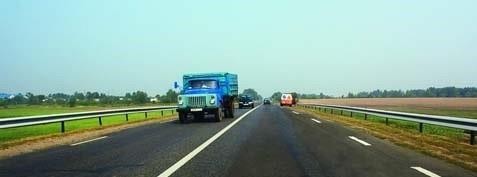
- The right to stop on the shoulder
- Edges of the carriageway on a two-lane road
- The right to drive on the shoulder
The correct answer: Edges of the carriageway on a two-lane road
Driving along this line in such a situation
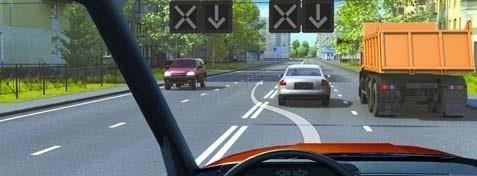
- Allowed only when overtaking
- Allowed
- Prohibited
The correct answer: Prohibited
Is parking allowed at the indicated place?
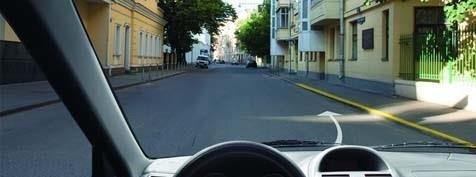
- Allowed
- Allowed, without mounting the sidewalk
- Prohibited
The correct answer: Prohibited
Overtaking with this marking
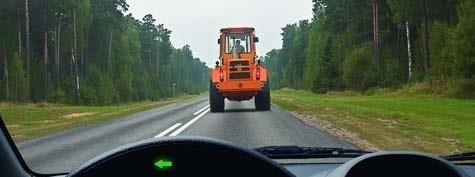
- Allowed
- Allowed if the vehicle ahead is moving slowly
- Prohibited
The correct answer: Prohibited
Can you continue driving after the sign?
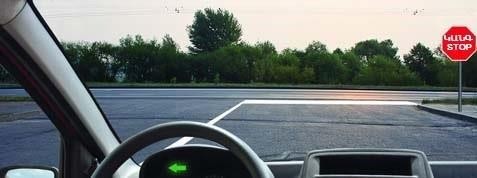
- Yes
- Yes, up to the Stop line
- No
The correct answer: Yes, up to the Stop line
When orange and white markings contradict, drivers
- Can follow the marking convenient for them
- Must follow the white marking requirements
- Must follow the orange marking requirements
The correct answer: Must follow the orange marking requirements
Which driver is allowed to cross the solid marking when stopping?
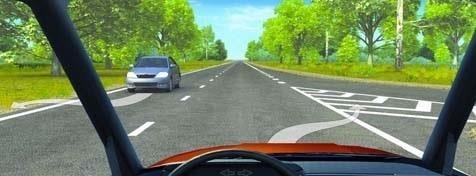
- Both drivers
- The driver moving from the opposite direction
- Neither driver is allowed
The correct answer: The driver moving from the opposite direction
Is stopping allowed at the indicated place?
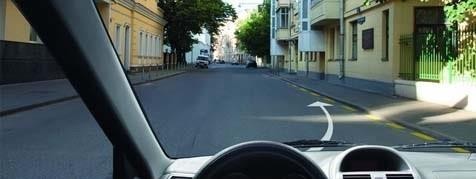
- Only for motorcycles
- No
- Yes
The correct answer: Yes
This marking
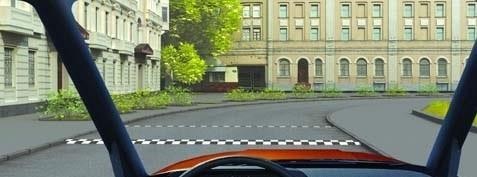
- Indicates the boundaries of a residential zone
- Indicates an artificial unevenness
- Prohibits further movement
The correct answer: Indicates an artificial unevenness
What does this marking prohibit?
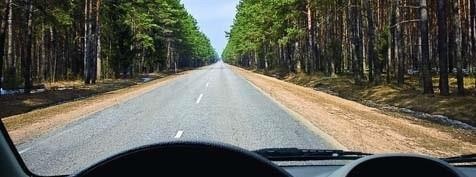
- Overtaking
- Bypassing
- U-turn
- Driving to the left or on top of it
The correct answer: Driving to the left or on top of it
This marking means
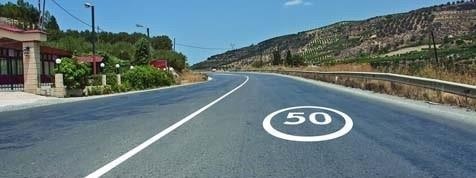
- Route or road number
- Recommended speed
- Maximum allowed speed on the indicated road section
The correct answer: Maximum allowed speed on the indicated road section
The marking on the roadway indicates
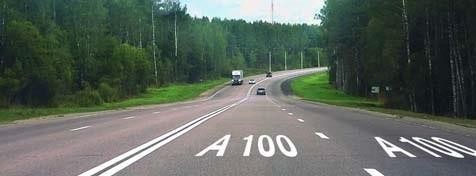
- Distance to the nearest intersection
- Distance to the nearest settlement
- Road or route number
The correct answer: Road or route number
From which side can the obstacle be bypassed?
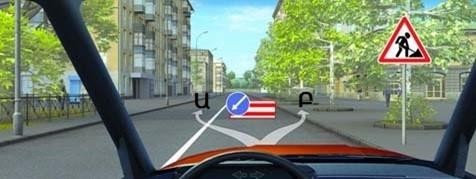
- Only A
- Only B
- Either side
The correct answer: Only A
Which vehicles are allowed to drive in the right edge lane of this road?
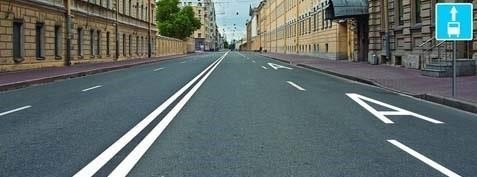
- Trolleybuses and public buses
- Trolleybuses and buses
- Only buses
The correct answer: Trolleybuses and public buses
Is parking allowed at the indicated place?
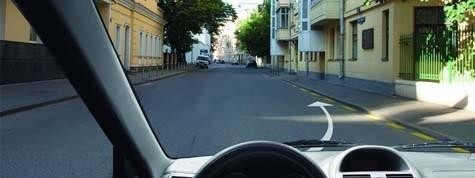
- Prohibited
- Only on the sidewalk
- Only motorcycles
- Allowed
The correct answer: Prohibited
Increasing the dashed markings means
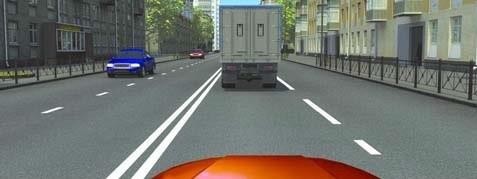
- Approaching the end of the lane
- Approaching a dangerous section
- That the marking will soon become solid
The correct answer: That the marking will soon become solid
Going straight in the indicated situation is
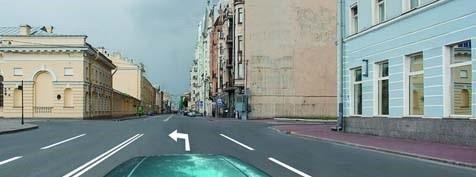
- Prohibited
- Allowed
- Allowed if you change to the right lane
The correct answer: Allowed if you change to the right lane
How many traffic lanes does this road have?
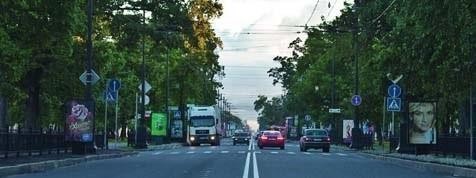
- Two
- Four
The correct answer: Four
What does an account add?
All questions and correct answers are accessible without signing up.
- Saved progress and continuation across devices
- A personal plan based on your target date
- Mistake analysis and targeted review
- Voice-guided learning and spoken answers