SPEED, TOWING, TRANSPORTATION OF PEOPLE AND CARGO
Questions are accessible without an account and load in batches of 20 for faster browsing.
What this topic covers
Questions about speed, towing and the transport of passengers and cargo.
Questions in the full bank: 79
Available questions: 79
How to study the questions
- Read the question and examine the image, if there is one.
- Choose an answer to see the correct option and any available explanation.
- Continue to the next question, then review your result. In-depth learning is available in your account.
Educational material; not a substitute for the current official rules.
Questions in this topic
What is the maximum allowed speed for passenger cars outside populated areas?
- 110 km/h
- 100 km/h
- 90 km/h
- 80 km/h
- 70 km/h
The correct answer: 90 km/h
The correct answer is “90 km/h”. Link the number to the vehicle type, road status and any special restriction rather than memorising it in isolation. Remember the number together with the vehicle type and road type. The other numerical choices do not apply to these conditions; the value to retain here is 90, as stated in the correct option.
What is the maximum allowed speed for cargo trucks equipped to carry passengers?
- 60 km/h
- 70 km/h
- 80 km/h
The correct answer: 60 km/h
The correct answer is “60 km/h”. The load dimensions, securing and projection beyond the vehicle determine which restriction or special marking applies. Remember: the amount a load projects determines whether special marking is required. The other numerical choices do not apply to these conditions; the value to retain here is 60, as stated in the correct option.
At what distance from the start of a dangerous section outside populated areas is this warning sign placed?
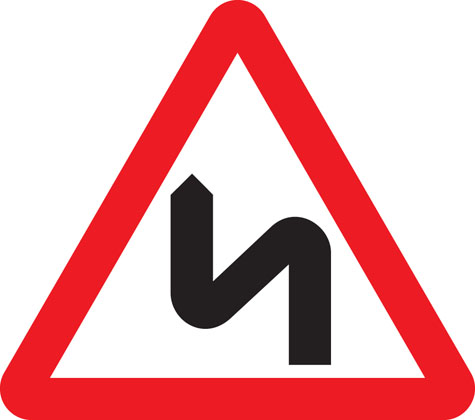
- 50 - 100 m
- 150 - 300 m
- 300 - 500 m
The correct answer: 150 - 300 m
The correct answer is “150 - 300 m”. The exact conditions are decisive, especially limiting words, numbers and the type of vehicle or road. Remember the answer together with its condition, not as an isolated number or yes/no. The other numerical choices do not apply to these conditions; the value to retain here is 150 - 300, as stated in the correct option.
What is the allowed maximum speed for vehicles transporting organized groups of children?
- No more than 60 km/h
- No more than 70 km/h
- No more than 80 km/h
The correct answer: No more than 60 km/h
The correct answer is “No more than 60 km/h”. The exact conditions are decisive, especially limiting words, numbers and the type of vehicle or road. Remember the answer together with its condition, not as an isolated number or yes/no. The other numerical choices do not apply to these conditions; the value to retain here is 60, as stated in the correct option.
What is the allowed maximum speed for vehicles within populated areas?
- No more than 60 km/h
- No more than 80 km/h
- No more than 90 km/h
The correct answer: No more than 60 km/h
The correct answer is “No more than 60 km/h”. The exact conditions are decisive, especially limiting words, numbers and the type of vehicle or road. Remember the answer together with its condition, not as an isolated number or yes/no. The other numerical choices do not apply to these conditions; the value to retain here is 60, as stated in the correct option.
In which direction(s) is movement allowed?

- Straight only
- Straight and right
- Straight, right, and left
- All directions
The correct answer: Straight, right, and left
What is the maximum allowed speed for intercity buses outside populated areas?
- No more than 70 km/h
- No more than 90 km/h
- No more than 110 km/h
The correct answer: No more than 70 km/h
What is the maximum allowed speed for trucks with a maximum permitted mass of 3.5 tons outside populated areas?
- No more than 90 km/h
- No more than 70 km/h
- No more than 80 km/h
The correct answer: No more than 90 km/h
Are suburban, interregional, and intercity bus drivers allowed to exceed 60 km/h within populated areas?
- Allowed only on roads with two or more lanes in the same direction.
- Allowed
- Not allowed
The correct answer: Not allowed
Is an intercity bus driver allowed to exceed 70 km/h outside populated areas?
- Allowed only on roads with two or more lanes in the direction of travel.
- Allowed if speed does not exceed 90 km/h.
- Not allowed
The correct answer: Allowed if speed does not exceed 90 km/h.
Where should the "Emergency Stop" sign be placed if the emergency lights are absent or malfunctioning during towing?
- At the rear of the towed vehicle.
- At the front of the towing vehicle.
- At the driver's discretion on one of the vehicles in a visible place.
The correct answer: At the rear of the towed vehicle.
What is the maximum allowed distance between vehicles when towing with a rigid coupling?
- 2 m
- 3 m
- 4 m
- 5 m
- 6 m
The correct answer: 4 m
Is it allowed to transport people in the cargo area of a truck during towing with a rigid or flexible coupling?
- Allowed in the cargo area of both the towing and the towed vehicles.
- Allowed only in the cargo area of the towed vehicle.
- Allowed only in the cargo area of the towing vehicle.
- Prohibited in the cargo areas of both vehicles.
The correct answer: Allowed only in the cargo area of the towing vehicle.
In which of the following cases is it allowed to transport people in the towed vehicle during towing with a rigid or flexible coupling?
- Allowed in a bus.
- Allowed in a light passenger vehicle.
- Allowed in the cargo area of a truck during rigid coupling towing.
The correct answer: Allowed in a light passenger vehicle.
What is the maximum allowed speed during towing by mechanical transport vehicles?
- 30 km/h.
- 40 km/h.
- 50 km/h.
- 60 km/h.
- 70 km/h.
The correct answer: 50 km/h.
Towing on icy conditions is prohibited when:
- Using flexible coupling.
- Using rigid coupling.
- When towing partially loaded.
The correct answer: Using flexible coupling.
What is the maximum speed allowed for towing under these conditions?
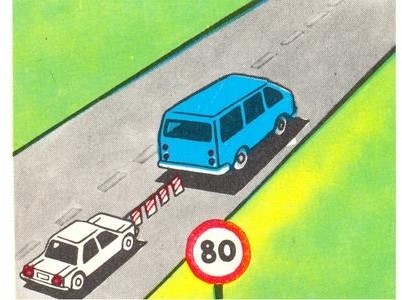
- 30 km/h.
- 50 km/h.
- 70 km/h.
- 80 km/h.
The correct answer: 50 km/h.
Is it allowed to transport people in the towed mechanical transport vehicle during towing with a flexible or rigid coupling?
- Allowed in buses and trolleybuses.
- Allowed only in light passenger vehicles.
- Allowed in truck cargo areas and light passenger vehicles.
- Allowed in truck cabins and light passenger vehicles.
- Prohibited.
The correct answer: Allowed in truck cabins and light passenger vehicles.
Towing on icy conditions:
- Is prohibited.
- Is allowed.
- Is allowed when towing with rigid coupling or partially loaded.
The correct answer: Is allowed when towing with rigid coupling or partially loaded.
What is the maximum allowed speed for towing vehicles with a flexible coupling?
- 70 km/h.
- 60 km/h.
- 50 km/h.
- 40 km/h.
- 30 km/h.
The correct answer: 50 km/h.
When is towing prohibited?
- On icy conditions with rigid coupling.
- On icy conditions with flexible coupling.
- With motorcycles with sidecars.
The correct answer: On icy conditions with flexible coupling.
When towing mechanical transport vehicles outside residential areas, the traffic speed must not exceed:
- 30 km/h.
- 40 km/h.
- 50 km/h.
- 60 km/h.
- 70 km/h.
The correct answer: 50 km/h.
Is towing motorcycles allowed?
- Allowed: towing motorcycles with a sidecar.
- Allowed: towing motorcycles without a sidecar.
- Allowed in both cases.
The correct answer: Allowed: towing motorcycles with a sidecar.
What distance should the flexible coupling ensure between vehicles during towing?
- 1 - 3 m.
- 2 - 4 m.
- 3 - 6 m.
- 4 - 6 m.
- 4 - 8 m.
The correct answer: 4 - 6 m.
What is the maximum allowed speed for light passenger cars towing a trailer on highways?
- 110 km/h.
- 100 km/h.
- 90 km/h.
- 80 km/h.
- 70 km/h.
The correct answer: 90 km/h.
During towing with a rigid coupling, the distance between vehicles should not exceed:
- 4 m.
- 5 m.
- 6 m.
The correct answer: 4 m.
When towing with partial loading of mechanical vehicles, is passenger transport allowed?
- In the towing vehicle’s cargo area.
- In the towed vehicle’s cabin.
- In the towed vehicle’s cargo area.
- In the towing vehicle’s cabin.
The correct answer: In the towing vehicle’s cabin.
Is towing motorcycles with a sidecar allowed?
- Allowed only with a rigid coupling.
- Not allowed.
- Allowed.
The correct answer: Allowed.
What is the maximum allowed speed during towing with a flexible coupling?
- 70 km/h.
- 60 km/h.
- 50 km/h.
- 40 km/h.
- 30 km/h.
The correct answer: 50 km/h.
Load on the vehicle must be distributed and, if necessary, secured so that:
- It does not stick out above the sides of the platform.
- It does not produce significant noise, dust, or pollution to the road and environment.
- It does not protrude more than 0.8 m from the rear edge of the vehicle.
The correct answer: It does not produce significant noise, dust, or pollution to the road and environment.
Are children allowed to be transported in the front seat of a passenger car if it is not equipped with a child restraint device, and if the child has reached the age of:
- 10 years.
- 11 years.
- 12 years.
The correct answer: 12 years.
Is transporting people in a truck trailer allowed?
- Not allowed.
- Allowed.
- Allowed only for persons accompanying the cargo.
The correct answer: Not allowed.
Is transporting children under 12 years old on the rear seat of a motorcycle allowed?
- Allowed.
- Not allowed.
The correct answer: Not allowed.
Is it allowed for people to be in the cargo bed of a truck while driving if it is not equipped for carrying people?
- It is prohibited.
- Allowed on roads that are not highways.
- Allowed only for persons accompanying the cargo or going to receive it, provided they have seats installed below the truck’s side walls.
The correct answer: Allowed only for persons accompanying the cargo or going to receive it, provided they have seats installed below the truck’s side walls.
Carrying people in a truck trailer:
- Prohibited.
- Allowed.
- Allowed only for persons accompanying the cargo.
The correct answer: Prohibited.
When towing with a rigid or flexible hitch, is carrying people in the towed bus allowed?
- Allowed.
- Allowed up to 8 passengers.
- Prohibited.
The correct answer: Prohibited.
Towing a bus on icy roads is prohibited with:
- Flexible hitch.
- Rigid hitch.
The correct answer: Flexible hitch.
Is it allowed to carry people in the towed vehicle when towing with a flexible or rigid hitch?
- Allowed in buses and trolleybuses.
- Allowed in the cabin of a truck and in a light passenger vehicle.
- Allowed in the cargo bed of a truck and in a light passenger vehicle.
- Prohibited.
The correct answer: Allowed in the cabin of a truck and in a light passenger vehicle.
Carrying people is prohibited if:
- The number of people inside a sightseeing bus exceeds the number of equipped seats.
- The number of people inside an intercity bus exceeds the number of equipped seats.
- In both cases.
The correct answer: In both cases.
When transporting organized groups of children by bus, there must be at least:
- One adult supervisor.
- Two adult supervisors.
- Three adult supervisors.
The correct answer: One adult supervisor.
What is the maximum allowed speed for interregional and intercity passenger buses outside settlements on all roads?
- 60 km/h.
- 70 km/h.
- 90 km/h.
The correct answer: 90 km/h.
Is it allowed for buses to drive outside settlements at 70 km/h?
- Allowed.
- Prohibited.
The correct answer: Allowed.
The speed limit for intercity buses inside settlements is not more than:
- 60 km/h.
- 70 km/h.
- 90 km/h.
The correct answer: 60 km/h.
What is the maximum allowed speed for intercity buses outside settlements?
- 60 km/h.
- 70 km/h.
- 90 km/h.
The correct answer: 90 km/h.
What is the maximum allowed speed for buses in areas equipped with the "Residential Zone" and "End of Residential Zone" signs?
- 20 km/h.
- 30 km/h.
- 40 km/h.
The correct answer: 20 km/h.
Is it allowed to transport people in a bus being towed with a rigid or flexible coupling?
- Allowed.
- Prohibited.
The correct answer: Prohibited.
When transporting people in a covered body, the truck driver must not exceed the speed of:
- 50 km/h.
- 60 km/h.
- 70 km/h.
The correct answer: 60 km/h.
Is transporting passengers in the towing bus allowed?
- Prohibited.
- Allowed.
The correct answer: Allowed.
What is the maximum allowed speed for intercity bus drivers in the presence of this sign?
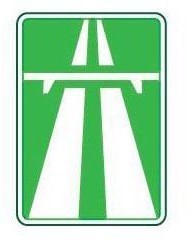
- 70 km/h.
- 90 km/h.
- 110 km/h.
The correct answer: 90 km/h.
What is the maximum speed the towing bus driver can travel at in this situation?
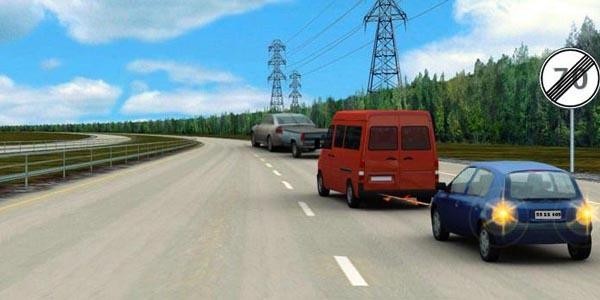
- 50 km/h.
- 60 km/h.
- 90 km/h.
The correct answer: 50 km/h.
What is the maximum speed the intercity bus driver can travel at in this situation?
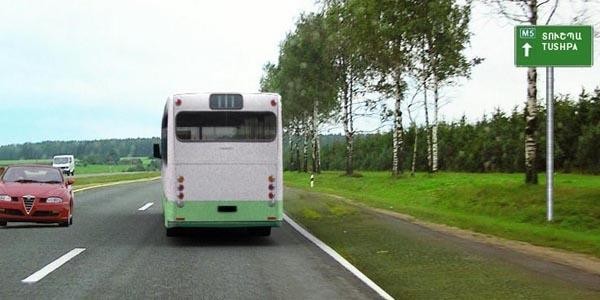
- 60 km/h.
- 70 km/h.
- 80 km/h.
- 90 km/h.
The correct answer: 90 km/h.
At what speed can a bus driver continue driving in the zone marked by this road sign?
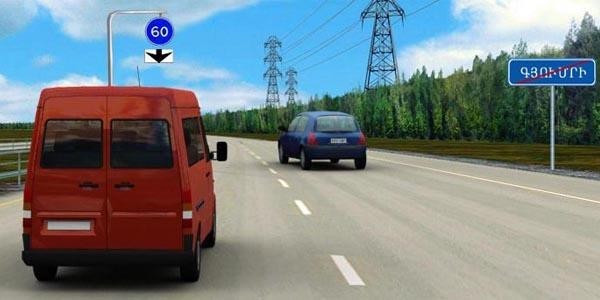
- Less than 60 km/h.
- Not less than 60 km/h, but not more than 70 km/h.
- Not less than 60 km/h, but not more than 90 km/h.
The correct answer: Not less than 60 km/h, but not more than 90 km/h.
On roads equipped with this sign, intercity bus drivers are allowed to drive at no more than:
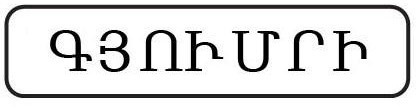
- 60 km/h.
- 80 km/h.
- 90 km/h.
The correct answer: 60 km/h.
On roads equipped with this sign, intercity bus drivers are allowed to drive at no more than:
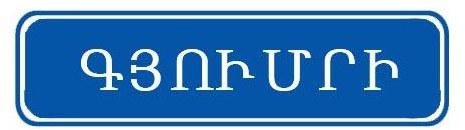
- 60 km/h.
- 80 km/h.
- 90 km/h.
The correct answer: 90 km/h.
Is transporting passengers inside the bus allowed in this situation?
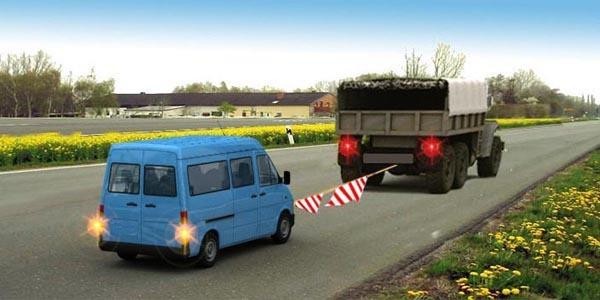
- Prohibited.
- Allowed.
- Allowed according to the number of seats.
The correct answer: Prohibited.
Is transporting passengers in the towed bus allowed during towing with a rigid or flexible coupling?
- Prohibited.
- Allowed during towing with a rigid coupling.
- Allowed.
The correct answer: Prohibited.
During towing, what lights must be turned on on the towed vehicle?
- High beam headlights.
- Parking lights or dipped headlights.
- Warning lights.
The correct answer: Warning lights.
What is the maximum allowed speed for intercity buses on highways?
- 70 km/h
- 80 km/h
- 90 km/h
- 100 km/h
- 110 km/h
The correct answer: 90 km/h
What is the maximum allowed speed for buses in the road section under the influence of this traffic sign?
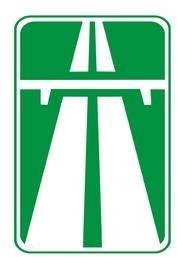
- 70 km/h
- 80 km/h
- 90 km/h
- 100 km/h
- 110 km/h
The correct answer: 90 km/h
What is the maximum allowed speed for intercity buses on highways?
- 70 km/h
- 80 km/h
- 90 km/h
- 100 km/h
- 110 km/h
The correct answer: 90 km/h
What speed is allowed for vehicle traffic in the areas influenced by the "Residential Zone" and "End of Residential Zone" road signs?
- No more than 5 km/h.
- No more than 10 km/h.
- No more than 20 km/h.
The correct answer: No more than 20 km/h.
What is the maximum allowed speed for passenger cars on the road sections influenced by this road sign?
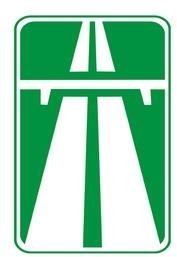
- 70 km/h.
- 80 km/h.
- 90 km/h.
- 100 km/h.
- 110 km/h.
The correct answer: 110 km/h.
What is the maximum allowed speed for a driver of a truck with a permitted maximum weight of no more than 3.5 tons in the zone influenced by these signs?
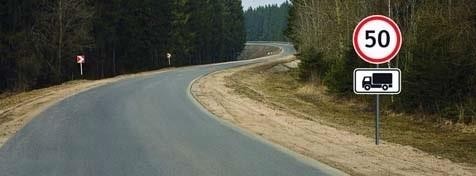
- No more than 50 km/h.
- No more than 70 km/h.
- No more than 90 km/h.
The correct answer: No more than 90 km/h.
When towing a mechanical vehicle, which lane of this road can you continue driving in?
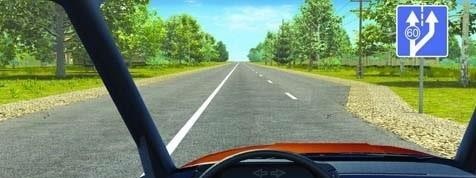
- Only the right lane.
- Any lane.
The correct answer: Only the right lane.
What conditions must the driver consider when selecting a speed that does not exceed the set limit?
- Condition of the road surface.
- Visibility in the direction of travel.
- Both conditions mentioned above.
The correct answer: Both conditions mentioned above.
What speed should the driver choose within the maximum allowed limit?
- A speed that ensures full control of the vehicle.
- The driver is free to choose any speed not exceeding the maximum allowed.
The correct answer: A speed that ensures full control of the vehicle.
The driver is prohibited to:
- Exceed the maximum speed specified by the vehicle’s technical specifications.
- Exceed the speed limit indicated by the "Speed Limit" sign installed on the vehicle.
- Drive unnecessarily at very low speed, obstructing the movement of other vehicles.
- Brake sharply without necessity to prevent a traffic accident.
- All of the above actions.
The correct answer: All of the above actions.
The driver is prohibited to:
- Cross a railway crossing at a speed exceeding 30 km/h.
- Cross a railway crossing at a speed less than 30 km/h.
- Move on a crossing without railway tracks with the permission of the railway track dispatcher, in slow vehicles at speeds less than 8 km/h and tractors with sledges attached.
The correct answer: Move on a crossing without railway tracks with the permission of the railway track dispatcher, in slow vehicles at speeds less than 8 km/h and tractors with sledges attached.
When approaching an intersection, the driver must drive the vehicle at such a speed that:
- It does not exceed the maximum allowed speed for that section.
- They have the ability to stop and let vehicles with the right of way pass.
The correct answer: They have the ability to stop and let vehicles with the right of way pass.
The driver is prohibited from increasing speed if:
- It will prevent a vehicle overtaking them from completing the overtaking maneuver.
- It is necessary to free the road for a driver stopped to give way.
- It is done to clear the intersection.
The correct answer: It will prevent a vehicle overtaking them from completing the overtaking maneuver.
The driver is obliged to reduce speed
- When approaching vehicles equipped with the "Transporting children" identification sign during the boarding and alighting of children.
- In case of skidding.
- If an obstacle or danger arises for traffic.
- When approaching a vehicle with flashing blue and red lights and a special sound signal, as well as when approaching a stationary vehicle with flashing blue or blue and red lights:
- In all of the above cases.
The correct answer: In all of the above cases.
If a load protrudes 0.5 m from the outer edge of the vehicle's side marker light, should it be marked during daylight hours with the "Wide load" identification sign, and in darkness or poor visibility also with white lights at the front and red lights or reflectors at the rear?
- Yes
- No
The correct answer: Yes
In a truck driven by a driver with B and C category licenses, observing the rules for transporting people in trucks, it is permitted to transport up to
- 8 passengers
- 9 passengers
- 4 passengers
The correct answer: 8 passengers
It is prohibited to transport children under 12 years old
- In the cargo body of a flatbed truck.
- In the cargo body of a van-type truck.
The correct answer: In the cargo body of a flatbed truck.
Should a load protruding 1.2 m from the rear side marker of a vehicle be marked during daylight with the "Wide load" sign, and in darkness or poor visibility also with white lights at the front and red lights or reflectors at the rear?
- Yes
- No
The correct answer: Yes
Transporting a load is prohibited if it
- Restricts the driver’s field of vision.
- Makes vehicle handling difficult and reduces stability.
- Covers external lighting devices, reflectors, license plates or identification signs, or interferes with perceiving hand signals.
- In all the above cases.
The correct answer: In all the above cases.
If the condition and arrangement of the load do not allow transportation according to the rules, the driver must
- Successfully deliver the load to the nearest unloading place.
- Eliminate the violations or stop further driving.
The correct answer: Eliminate the violations or stop further driving.
Should a load protruding 0.6 m from the rear side marker of a vehicle be marked during daylight with the "Wide load" sign, and in darkness or poor visibility also with white lights at the front and red lights or reflectors at the rear?
- Yes
- No
The correct answer: No
If a load protrudes 0.3 m from the outer edge of the vehicle's side marker light, should it be marked during daylight hours with the "Wide load" identification sign, and in darkness or poor visibility also with white lights at the front and red lights or reflectors at the rear?
- Yes
- No
The correct answer: No
What does an account add?
All questions and correct answers are accessible without signing up.
- Saved progress and continuation across devices
- A personal plan based on your target date
- Mistake analysis and targeted review
- Voice-guided learning and spoken answers