WARNING SIGNALS, SPECIAL SIGNALS, OVERTAKING
Questions are accessible without an account and load in batches of 20 for faster browsing.
What this topic covers
Questions about warning signals, special signals and overtaking.
Questions in the full bank: 125
Available questions: 125
How to study the questions
- Read the question and examine the image, if there is one.
- Choose an answer to see the correct option and any available explanation.
- Continue to the next question, then review your result. In-depth learning is available in your account.
Educational material; not a substitute for the current official rules.
Questions in this topic
When approaching a stationary vehicle with a red flashing beacon turned on, drivers of public vehicles traveling in that direction must:
- Stop and continue driving only after receiving permission.
- Reduce speed to be able to stop immediately if necessary.
- Continue driving since they are on a designated route.
The correct answer: Stop and continue driving only after receiving permission.
The correct answer is “Stop and continue driving only after receiving permission.”. Applying the relevant road rule to the conditions described in the question leads to this result. The decision should be based on the signs, markings and positions of road users rather than on the overall appearance alone.
When a vehicle with a blue flashing beacon and a special sound signal approaches, drivers of public vehicles must:
- Continue driving since they are on a designated route.
- Yield the way to ensure the unobstructed passage of the indicated vehicle.
- Reduce speed and yield the way to ensure the unobstructed passage of the indicated vehicle.
The correct answer: Yield the way to ensure the unobstructed passage of the indicated vehicle.
The correct answer is “Yield the way to ensure the unobstructed passage of the indicated vehicle.”. Distinguish beacon colour from the presence of a special audible signal; they do not have the same legal effect. Remember: beacon colour alone may not be enough—check the audible signal too.
Drivers of public vehicles may use sound signals:
- To gain advantage over other traffic participants.
- In residential areas to warn other drivers of intention to horn.
- When necessary to prevent a road traffic accident.
- In all cases.
The correct answer: When necessary to prevent a road traffic accident.
The correct answer is “When necessary to prevent a road traffic accident.”. The signal must match the manoeuvre and be given in time, but it does not by itself create priority. Remember: a signal communicates intention; it does not grant priority.
During dark hours on unlit parts of the road, a bus traveling on a designated route must have turned on:
- Only the low beam headlights.
- Only the high beam headlights.
- Either the high beam or low beam headlights.
The correct answer: Either the high beam or low beam headlights.
The correct answer is “Either the high beam or low beam headlights.”. The exact conditions are decisive, especially limiting words, numbers and the type of vehicle or road. Remember the answer together with its condition, not as an isolated number or yes/no.
Is it mandatory to have low beam headlights turned on during daylight hours on a special separated lane for public vehicles traveling opposite to the main flow?
- It is mandatory.
- It is not mandatory.
The correct answer: It is mandatory.
The correct answer is “It is mandatory.”. The exact conditions are decisive, especially limiting words, numbers and the type of vehicle or road. Remember the answer together with its condition, not as an isolated number or yes/no. The other options change at least one condition—such as the number, vehicle type, location or permitted action—so they do not apply to this situation.
In which case are warning signals not required by the rules?
- When stopping at the edge of the roadway.
- Before a road curve under the "Dangerous turn" sign.
- Before changing to an adjacent traffic lane.
The correct answer: Before a road curve under the "Dangerous turn" sign.
Before changing lanes, the warning signal must be given:
- Immediately before starting the maneuver.
- Immediately after starting the maneuver.
- In advance, before starting the maneuver.
The correct answer: In advance, before starting the maneuver.
Before performing a maneuver, the warning signal must be given:
- Immediately before starting the maneuver.
- At the same time as starting the maneuver.
- In advance, before starting the maneuver.
The correct answer: In advance, before starting the maneuver.
The hand-given warning signal by the driver is stopped:
- Immediately before starting the maneuver.
- Immediately after finishing the maneuver.
- While performing the maneuver.
The correct answer: Immediately before starting the maneuver.
In which case must the driver give a warning signal before stopping?
- If another vehicle is driving behind him.
- Only in residential areas.
- In all cases.
The correct answer: In all cases.
What kind of general alarm signal by repeated sound signals is the driver obliged to give at a railway crossing when performing a forced stop?
- Three long and one short.
- One long and three short.
- One long and two short.
The correct answer: One long and three short.
In case of absence or malfunction of the turn signal light, when is the manually given warning signal stopped?
- Immediately before starting the maneuver.
- Immediately after completing the maneuver.
- During the maneuver.
The correct answer: Immediately before starting the maneuver.
Which combination of sound signals is the general alarm signal given at a railway crossing?
- Two long and two short.
- One long and three short.
- Three long and three short.
- Three long and one short.
The correct answer: One long and three short.
In which picture is the driver signaling a left turn?
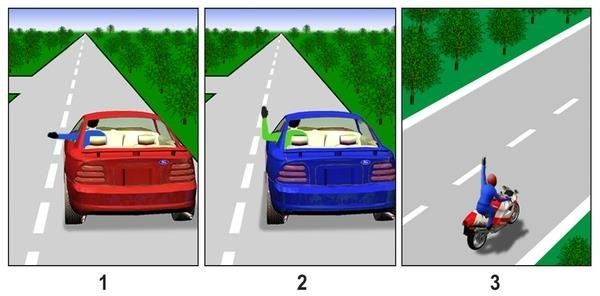
- 1
- 2
- 3
The correct answer: 1
When approaching a stopped vehicle with a flashing red beacon, drivers of vehicles traveling in that direction must:
- Stop and continue only after receiving permission.
- Reduce speed to be able to stop immediately if necessary.
The correct answer: Reduce speed to be able to stop immediately if necessary.
What is the purpose of orange or yellow flashing beacons installed on vehicles?
- To gain priority over other traffic participants.
- To warn other traffic participants about danger.
The correct answer: To warn other traffic participants about danger.
When a vehicle with a blue flashing beacon and special sound signal approaches, drivers must:
- Yield the way to ensure the unobstructed passage of that vehicle.
- Reduce speed and yield the way to ensure the unobstructed passage of that vehicle.
The correct answer: Yield the way to ensure the unobstructed passage of that vehicle.
The blue car will cross the intersection:
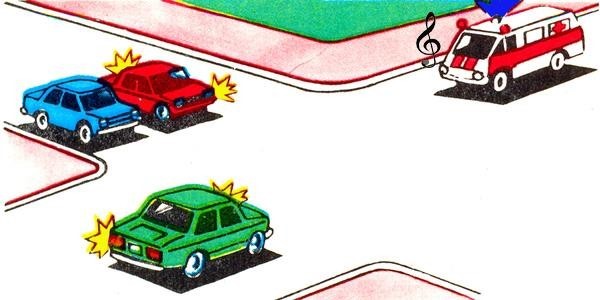
- First, simultaneously with the red car.
- Second, simultaneously with the red car.
- Third, simultaneously with the red car.
The correct answer: Third, simultaneously with the red car.
When a vehicle with blue and red flashing beacons and a special sound signal approaches, drivers must:
- Yield the way to ensure the unobstructed passage of that vehicle.
- Reduce speed and yield the way to ensure the unobstructed passage of that vehicle as well as the vehicles accompanying it.
The correct answer: Reduce speed and yield the way to ensure the unobstructed passage of that vehicle as well as the vehicles accompanying it.
Which vehicle driver has the right of way?
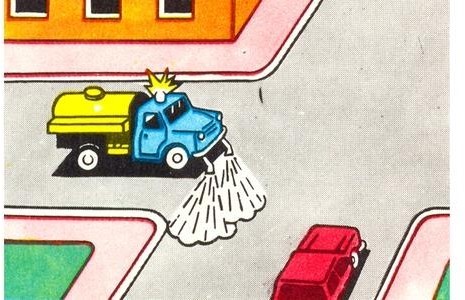
- The road machine driver.
- The light passenger car driver.
The correct answer: The light passenger car driver.
The black car will cross the intersection:
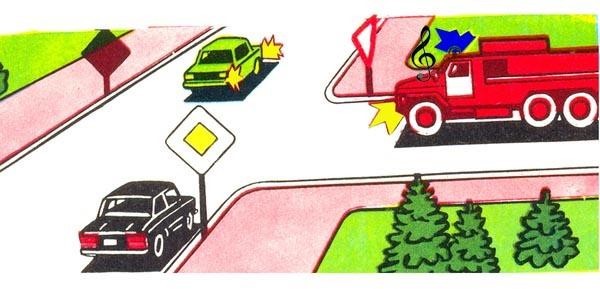
- First.
- Second.
- Last.
The correct answer: Second.
Which vehicle driver must yield the right of way?
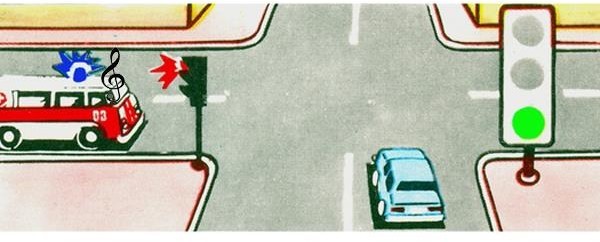
- Ambulance driver.
- Passenger car driver.
The correct answer: Passenger car driver.
The blue car will cross the intersection:
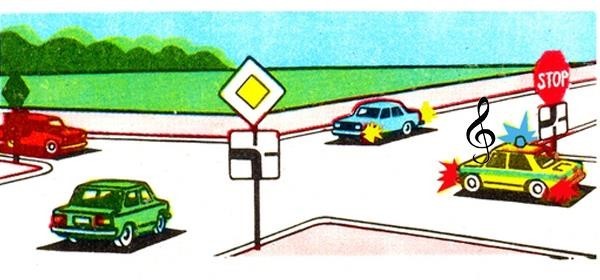
- First.
- Second.
- Third.
- Last.
The correct answer: Last.
Does a vehicle with a yellow (orange) flashing beacon have the right of way?
- Yes, it does.
- No, it does not.
The correct answer: No, it does not.
The driver of a vehicle equipped with flashing white beacons gives a special sound signal in order to:
- Gain right of way over other traffic participants.
- Attract the attention of police officers and other persons.
The correct answer: Attract the attention of police officers and other persons.
The driver of a vehicle equipped with a blue flashing beacon has priority over other traffic participants if:
- The flashing beacon is turned on.
- A special sound signal is given.
- The blue flashing beacon and special sound signal are both turned on.
The correct answer: The blue flashing beacon and special sound signal are both turned on.
At what distance is overtaking prohibited before a railway crossing?
- Up to 50 meters before.
- Up to 100 meters before.
- Up to 150 meters before.
The correct answer: Up to 100 meters before.
Is overtaking allowed at an intersection on the main road over a vehicle crossing?
- It is allowed.
- It is prohibited.
The correct answer: It is prohibited.
Is the driver of a passenger car allowed to overtake in the given situation?
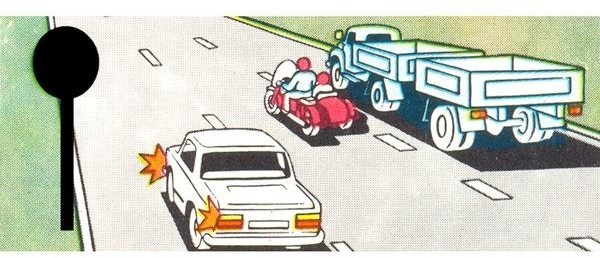
- Allowed.
- Allowed if the motorcycle speed does not exceed 30 km/h.
- Prohibited.
The correct answer: Prohibited.
Overtaking is prohibited:
- At intersections.
- Within 150 meters before railway crossings.
- In both cases.
The correct answer: At intersections.
Overtaking is prohibited:
- At regulated intersections.
- At unregulated intersections.
- In both cases.
The correct answer: In both cases.
Is it allowed to overtake a convoy in this situation if its speed does not exceed 30 km/h?
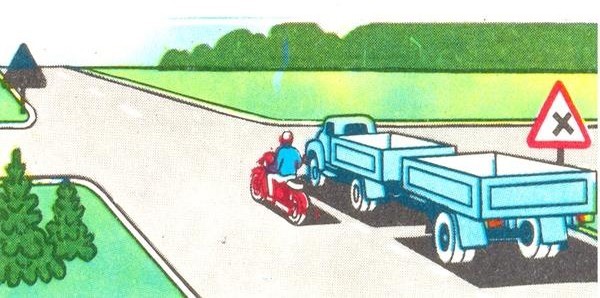
- Not allowed.
- Allowed.
The correct answer: Not allowed.
Is it allowed to overtake the green car driver?
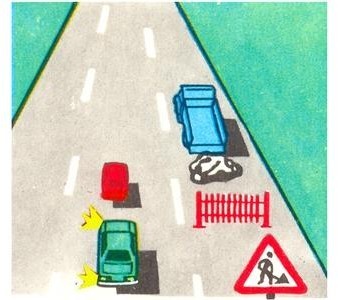
- Allowed.
- Not allowed.
- Allowed if the red car is moving at a speed less than 30 km/h.
The correct answer: Not allowed.
Is it allowed to overtake the red car driver in this situation?
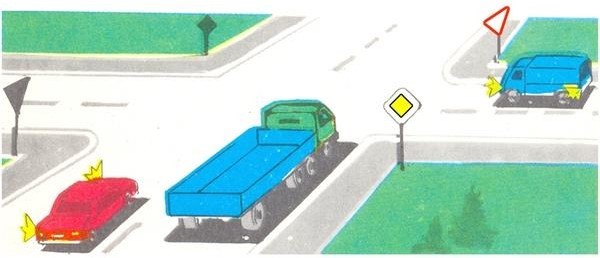
- Allowed.
- Not allowed.
- Allowed if the overtaken car’s speed does not exceed 30 km/h.
The correct answer: Not allowed.
Is it allowed to overtake the bus in the indicated place?
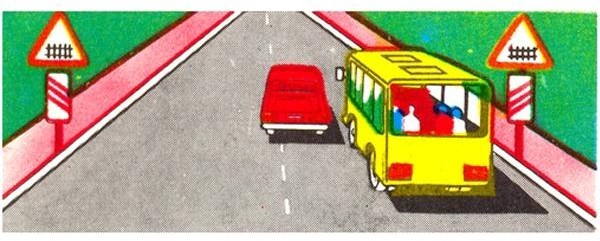
- Allowed.
- Not allowed.
The correct answer: Allowed.
Overtaking of vehicles means:
- Passing one or several moving vehicles ahead, involving entering the oncoming traffic lane from the occupied lane.
- Passing one or several moving vehicles ahead, involving leaving the occupied lane.
The correct answer: Passing one or several moving vehicles ahead, involving leaving the occupied lane.
During nighttime and conditions of insufficient visibility, regardless of the road lighting, mechanical vehicles in motion must have switched on:
- High beam headlights.
- Low beam headlights.
- Either high beam or low beam headlights.
The correct answer: Either high beam or low beam headlights.
In which case during daylight should a motorcycle have its low beam headlights on?
- When driving under conditions of insufficient visibility.
- When driving a faulty motorcycle heading to a parking place.
- In all cases while driving.
- When transporting a sick passenger.
The correct answer: In all cases while driving.
What is the primary action a driver must take when dazzled by the headlights of an oncoming vehicle?
- Switch the high beam (if on) to low beam.
- Turn on the hazard warning lights.
- Give an audio signal of one long and three short sounds.
- Give an audio signal of one short and three long sounds.
The correct answer: Turn on the hazard warning lights.
Audible signals may be used only:
- In residential areas to warn other drivers of the intention to overtake.
- When necessary to prevent a road traffic accident.
- In both cases.
The correct answer: When necessary to prevent a road traffic accident.
During dark hours of the day, on unlit road sections, the mechanical vehicle must have turned on:
- High beam or low beam headlights.
- Only low beam headlights.
- Only high beam headlights.
The correct answer: High beam or low beam headlights.
Rear fog lights may be used:
- During dark hours while driving in a convoy.
- When driving in tunnels.
- Only under insufficient visibility conditions.
- During dark hours while unloading the vehicle.
- In all the listed cases.
The correct answer: Only under insufficient visibility conditions.
At what distance from an oncoming vehicle should the high beam headlights be switched to low beam?
- Not less than 100 m.
- Not less than 150 m.
- Not less than 300 m.
The correct answer: Not less than 150 m.
Spotlights are allowed to be used:
- Only outside residential areas when there are no oncoming or same-direction vehicles.
- Only under insufficient visibility conditions.
- Anywhere, if necessary.
- During dark hours on all road sections.
The correct answer: Only outside residential areas when there are no oncoming or same-direction vehicles.
At what distance before the start of a dangerous section is this warning sign placed in residential areas?
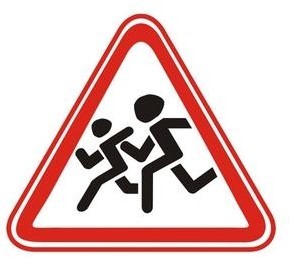
- 25 - 50 m.
- 50 - 100 m.
- 100 - 150 m.
The correct answer: 50 - 100 m.
Is it allowed to transport agricultural, road, construction and other machines and mechanisms over a railway crossing?
- Allowed if the crossing is not equipped with a barrier.
- Allowed if they are not in transport condition.
- Allowed if they are in transport condition.
The correct answer: Allowed if they are in transport condition.
Where is it allowed to cross railway tracks?
- At places where visibility in both directions is at least 1000 m.
- At the driver’s discretion in the most convenient places.
- At designated places for this purpose.
- At least 1000 m away from railway stations.
The correct answer: At designated places for this purpose.
Is it allowed during official duty to voluntarily open or bypass the barrier?
- Forbidden.
- Allowed.
- Allowed at driver’s discretion if there is no approaching train nearby.
- Allowed if the crossing guard is absent.
The correct answer: Forbidden.
Is it allowed to transport agricultural, road, construction and other machines and mechanisms over a railway crossing?
- Allowed.
- Allowed if they are in transport condition.
- Forbidden.
The correct answer: Allowed if they are in transport condition.
What should the driver be guided by when approaching a railway crossing?
- By the position of the barrier and the signals of the traffic light.
- By the requirements of road signs and markings.
- By the instructions of the crossing guard.
- By all the above-mentioned requirements.
The correct answer: By all the above-mentioned requirements.
Is it allowed for pedestrians to move on a road marked with the "Motorway" sign?
- It is prohibited.
- It is allowed outside settlements moving against the flow of vehicles.
- It is allowed outside settlements moving in the direction of the vehicle flow.
The correct answer: It is prohibited.
Vehicles whose speed does not exceed 40 km/h due to technical specifications or condition are allowed to travel on motorways
- Only in the rightmost lane.
- It is prohibited.
- It is allowed if there is no "Minimum Speed Limit" sign.
The correct answer: It is prohibited.
The emergency flashing lights on a vehicle must be turned on:
- In case of a traffic accident.
- When stopped in prohibited places due to forced stop.
- In both cases.
The correct answer: In both cases.
The emergency flashing lights on a vehicle must be turned on:
- In case of a traffic accident.
- When towing (on the towed mechanical vehicle).
- When stopped in prohibited places due to forced stop.
- In all the above cases.
The correct answer: In all the above cases.
At what distance from the vehicle is the "Emergency Stop" sign placed?
- In settlements: no less than 15 m, outside settlements: 30 m.
- In settlements: no less than 10 m, outside settlements: 20 m.
- In settlements: no less than 5 m, outside settlements: 10 m.
The correct answer: In settlements: no less than 15 m, outside settlements: 30 m.
The emergency flashing lights on a vehicle must be turned on:
- When the driver is dazzled by the headlights of other vehicles.
- When towing (on the towed mechanical vehicle).
- In both cases.
The correct answer: In both cases.
In built-up areas where entry and exit are indicated by "Residential Zone" and "End of Residential Zone" traffic signs, it is not prohibited to:
- Pedestrians moving on the roadway.
- Through traffic of vehicles.
- Learner driving.
The correct answer: Pedestrians moving on the roadway.
An intersection is considered regulated if the traffic sequence is determined by:
- Only by traffic light signals.
- Only by the signals of a traffic controller.
- By both.
The correct answer: By both.
Does the presence of a paved section immediately before an intersection on an unpaved dirt road make that road equivalent to a crossing road?
- No.
- Yes.
The correct answer: No.
In which picture are the permissible directions of traffic shown?
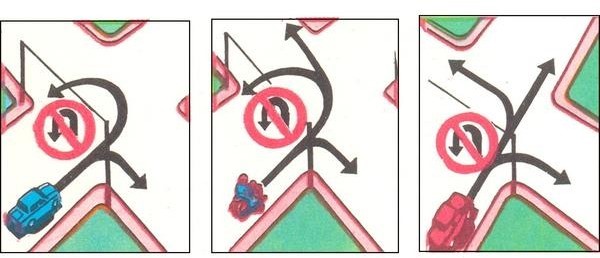
- In the left picture.
- In the middle picture.
- In the right picture.
- In the middle and right pictures.
The correct answer: In the right picture.
If the meanings of the traffic light signals contradict the requirements of the priority signs, drivers must be guided by:
- The requirements of the signs.
- The traffic light signals.
The correct answer: The traffic light signals.
Is the driver allowed to continue driving when the yellow traffic light turns on or the traffic controller raises their hand?
- Not allowed.
- Allowed, if the driver cannot stop without sudden braking.
The correct answer: Allowed, if the driver cannot stop without sudden braking.
The traffic controller gives signals with a whistle:
- Only when requiring a vehicle to stop.
- To attract the attention of road users.
The correct answer: To attract the attention of road users.
Is the road train allowed to cross the bridge in the given situation?
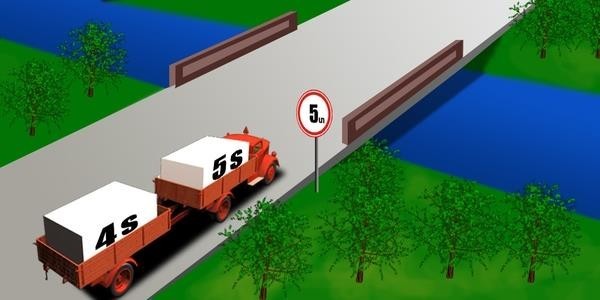
- Allowed.
- Not allowed.
The correct answer: Not allowed.
In which case is the bus driver not required to give a warning signal?
- When stopping at the edge of the roadway.
- Before a curve in a section marked with a “Dangerous Curve” sign.
- Before changing to an adjacent traffic lane.
- While driving along a designated route.
The correct answer: Before a curve in a section marked with a “Dangerous Curve” sign.
Before changing lanes, the bus driver must give a warning signal:
- Immediately before starting the maneuver.
- Immediately after starting the maneuver.
- In advance, before starting the maneuver.
- Not required, if the bus is on a designated route.
The correct answer: In advance, before starting the maneuver.
In case of a forced stop on a railway crossing, what type of general alarm signal must the bus driver give using sound signals?
- Three long and one short.
- One long and three short.
- One long and two short.
- Two long and two short.
The correct answer: One long and three short.
Is the intercity bus driver allowed to overtake a motorcycle traveling at 70 km/h?
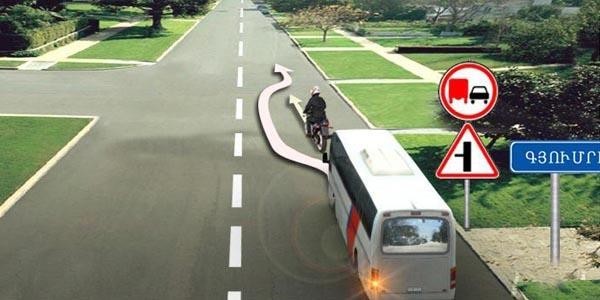
- Not allowed.
- Allowed.
The correct answer: Not allowed.
Is it allowed to give a hand signal for the intended maneuver shown in the diagram?
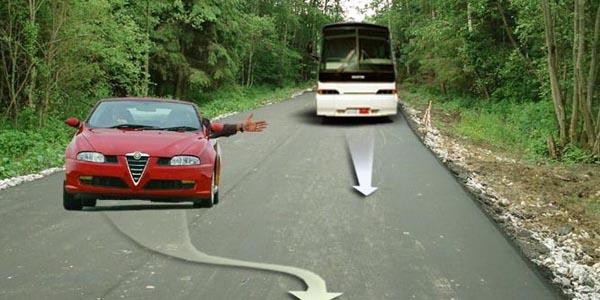
- Allowed, if the turn signal is malfunctioning.
- Allowed, if the turn signal is malfunctioning and during daylight hours.
- Allowed in all cases.
The correct answer: Allowed, if the turn signal is malfunctioning.
Is the driver required to turn on the turn signal before starting to drive in a residential area?
- Not required.
- Required.
- Required, if there are other vehicles present.
The correct answer: Required.
To gain the right of way over other road users, a patrol service vehicle driver must activate:
- The blue flashing beacon.
- The blue and red flashing beacons.
- The blue flashing beacon and the special sound signal.
The correct answer: The blue flashing beacon and the special sound signal.
Is the bus driver required to yield to an ambulance if the blue flashing beacon and the special sound signal are not activated?
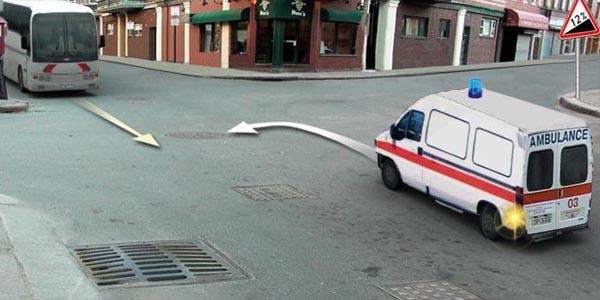
- Required.
- Not required.
The correct answer: Not required.
Overtaking is prohibited:
- On railway crossings and within 100m before them.
- On railway crossings and within 150m before them.
- On railway crossings and within 250m before them.
The correct answer: On railway crossings and within 100m before them.
What does the hand signal given by the light passenger vehicle driver indicate?
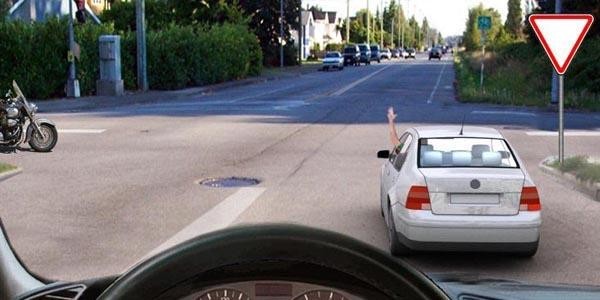
- A right turn.
- Continuing straight.
- Braking.
The correct answer: Braking.
The emergency light signal is activated:
- Before entering a tunnel.
- In the event of a road traffic accident.
- When driving as part of an organized convoy.
The correct answer: In the event of a road traffic accident.
What does the hand signal given by the motorcycle driver indicate?
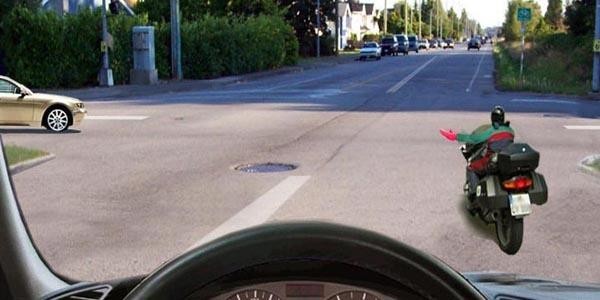
- Continuing left or in the opposite direction.
- Continuing straight or to the right.
The correct answer: Continuing left or in the opposite direction.
What does the hand signal given by the light passenger vehicle driver indicate?
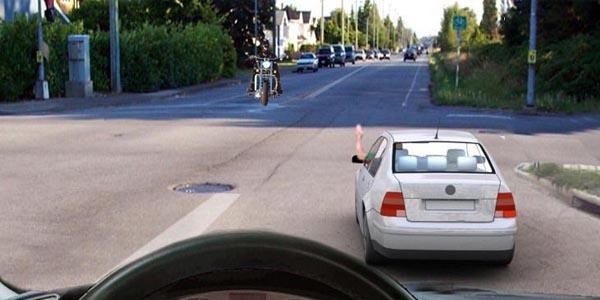
- A right turn.
- Continuing straight.
- Braking to yield to the motorcycle.
The correct answer: A right turn.
What does the hand signal given by the light passenger vehicle driver indicate?
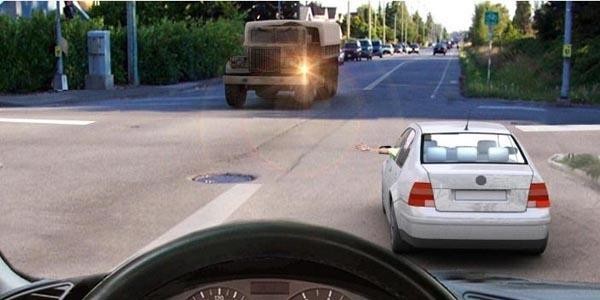
- Intends to make a left turn or a U-turn.
- Braking to yield to the truck.
The correct answer: Intends to make a left turn or a U-turn.
Is the driver required to turn on the turn signal in this case?
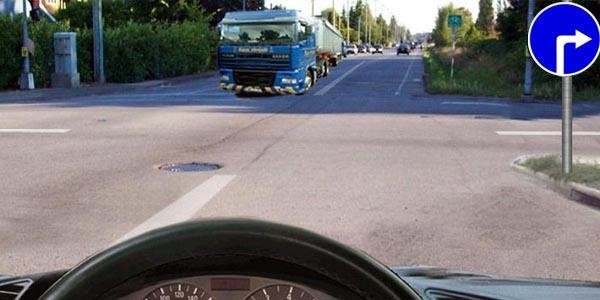
- Required.
- Not required.
The correct answer: Required.
During daylight hours, when transporting organized groups of children, the bus must have:
- High beam headlights on.
- Low beam headlights on.
- Hazard warning lights on.
- Interior lighting on.
The correct answer: Low beam headlights on.
Is a truck driver allowed to overtake a bus traveling at 60 km/h?
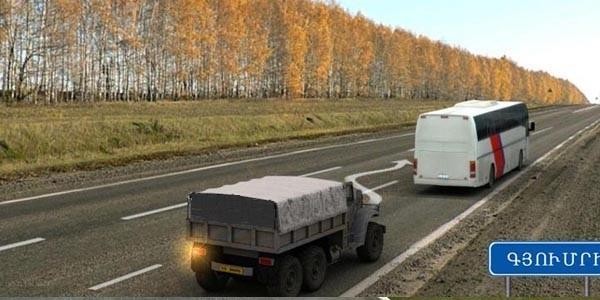
- Prohibited.
- Permitted.
The correct answer: Permitted.
Is overtaking allowed in this situation?
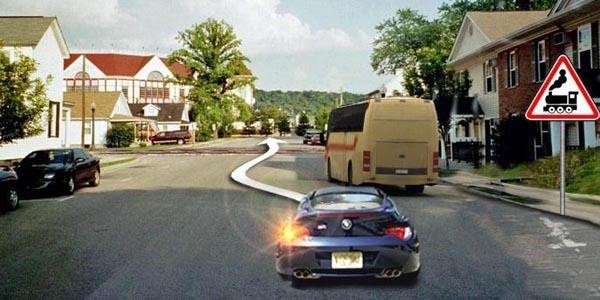
- Prohibited.
- Permitted.
- Permitted if the bus is moving at 30 km/h slower speed.
The correct answer: Prohibited.
Is it allowed to enter the railway crossing in this situation?
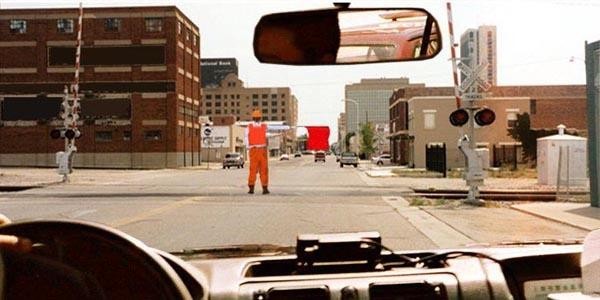
- Permitted.
- Prohibited.
The correct answer: Prohibited.
Is it allowed to enter the railway crossing in this situation?
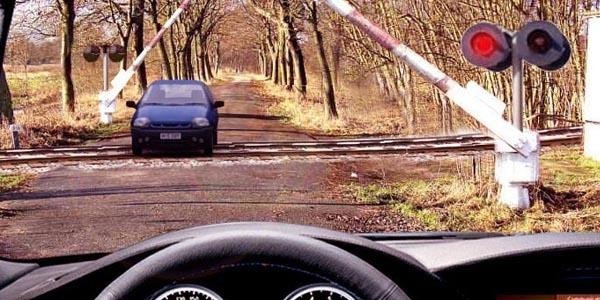
- Permitted if no train is approaching.
- Permitted if the barrier is open.
- Prohibited.
The correct answer: Prohibited.
How should you act in this situation?
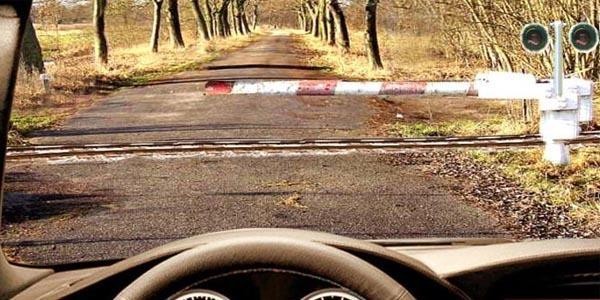
- If no train is present, bypass the barrier and continue driving.
- Stop and wait for the barrier to open.
The correct answer: Stop and wait for the barrier to open.
Is it allowed to cross the railway in this situation?
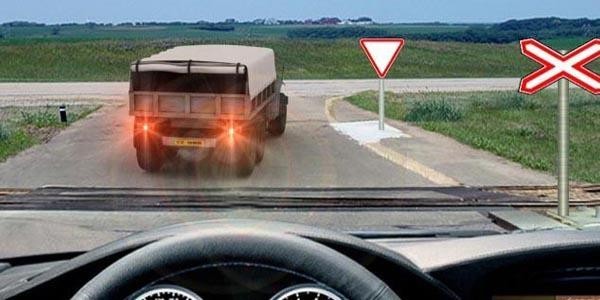
- Permitted if no train is approaching.
- Permitted.
- Prohibited.
The correct answer: Prohibited.
Is it allowed to cross the railway in this situation?
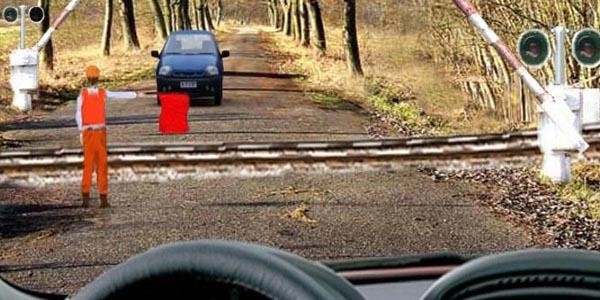
- Prohibited.
- Permitted if no approaching train.
- Permitted, since the crossing guard is prohibiting the oncoming vehicle.
The correct answer: Prohibited.
In this situation, where is overtaking allowed to begin?
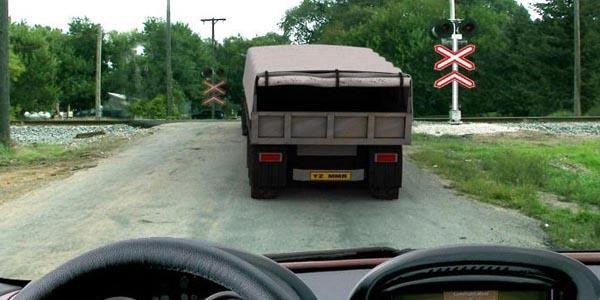
- On the railway crossing.
- After passing the railway crossing.
- 100 meters after passing the railway crossing.
The correct answer: After passing the railway crossing.
Is overtaking allowed in this situation?
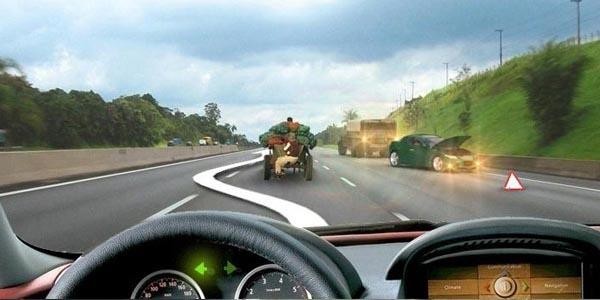
- Permitted, since there is no oncoming traffic.
- Prohibited.
- Permitted if the cart is moving 30 km/h slower.
The correct answer: Prohibited.
What maneuver is the driver of the light vehicle performing?
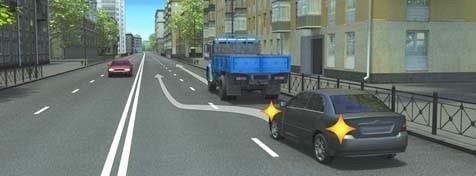
- Lane change
- Overtaking
- Passing
The correct answer: Overtaking
Is it allowed to overtake the motorcycle?
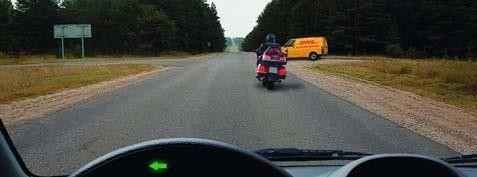
- Allowed
- Prohibited
The correct answer: Prohibited
In which case is overtaking allowed in the oncoming traffic lane on roads with one lane in each direction?
- Only when the oncoming lane is free with enough distance.
- Only when you are not being overtaken.
- Both conditions must be met.
The correct answer: Both conditions must be met.
Is overtaking allowed in the indicated situation?
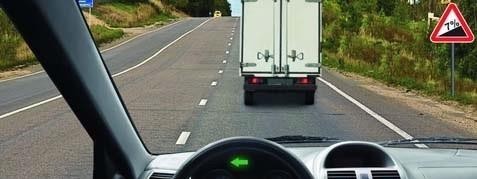
- Prohibited
- Allowed, if the maneuver can be completed within the visible range.
- Allowed
The correct answer: Allowed
Is it allowed to overtake the truck?
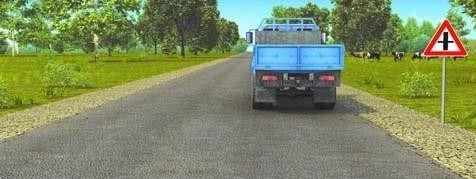
- Yes
- Yes, if the overtaking is completed before the intersection
- No
The correct answer: Yes, if the overtaking is completed before the intersection
What is required from the driver of the overtaken vehicle?
- They must yield to the overtaking driver.
- They must not interfere in any way with the overtaking vehicle, such as by accelerating or making other maneuvers.
The correct answer: They must not interfere in any way with the overtaking vehicle, such as by accelerating or making other maneuvers.
Is overtaking allowed in this situation?
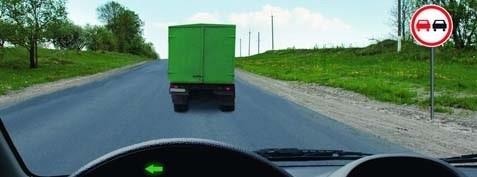
- Prohibited
- Allowed if the truck's speed is less than 30 km/h
- Allowed
The correct answer: Prohibited
Is the truck driver allowed to overtake the tractor if the permissible maximum mass is 3 tons?
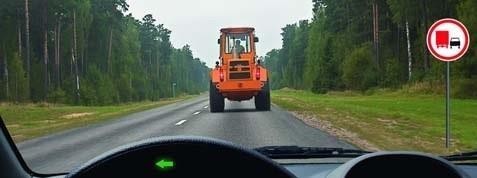
- Yes
- Yes, if the tractor is moving slower than 30 km/h
- No
The correct answer: Yes
If oncoming traffic is difficult in this situation, who must yield the road?
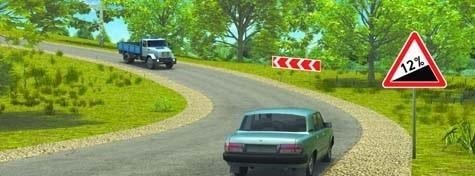
- The truck driver
- The light vehicle driver
The correct answer: The truck driver
Overtaking at a pedestrian crossing
- Is prohibited only when a pedestrian is present.
- Is prohibited.
- Is allowed.
The correct answer: Is prohibited.
Which path is allowed for overtaking?
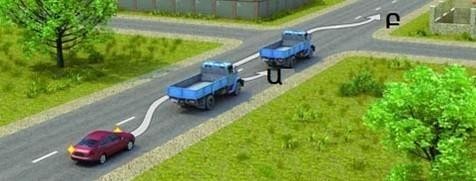
- Any
- Only A
- Only B
The correct answer: Only A
What does the road sign indicate?
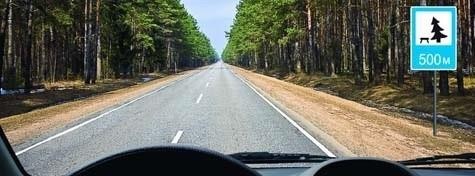
- There is a fallen tree 500 meters ahead
- There is a rest area 500 meters ahead
- There is a rest area within 500 meters
The correct answer: There is a rest area 500 meters ahead
The driver must turn on the turn signal in this situation
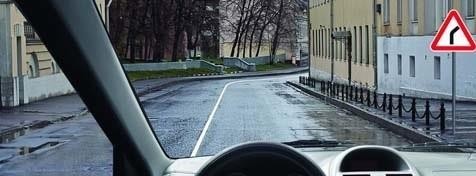
- Is obliged
- Is obliged if there is a driver approaching from behind
- Is not obliged
The correct answer: Is not obliged
A driver signaling with an upward raised hand means
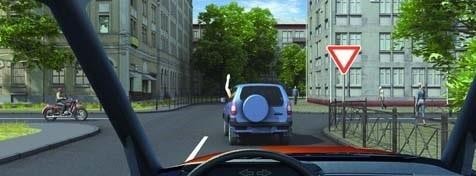
- Turning left
- Going straight
- Slowing down
The correct answer: Slowing down
Giving a signal gives advantage over other traffic participants
- It does
- It does not
- Only when starting to move
The correct answer: It does not
What is the motorcyclist signaling?
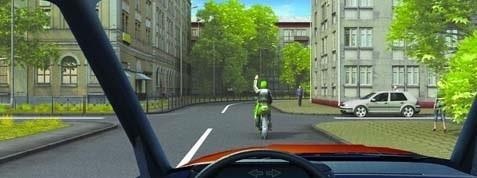
- Continuing straight
- Turning left
- Slowing down to yield to a light passenger car
The correct answer: Slowing down to yield to a light passenger car
Is signaling mandatory when turning left in this situation?
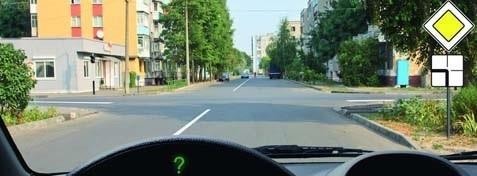
- Mandatory
- Not mandatory
The correct answer: Mandatory
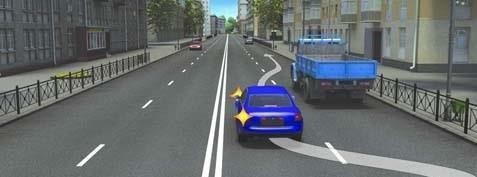
When overtaking, we must turn off the left turn signal
- Immediately after rejoining the left lane
- Only after passing the vehicle ahead
- At the driver’s discretion
The correct answer: Immediately after rejoining the left lane
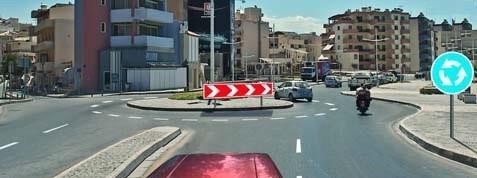
When making a U-turn at this intersection, which turn signal should we use?
- Right
- Left
- None
The correct answer: Right
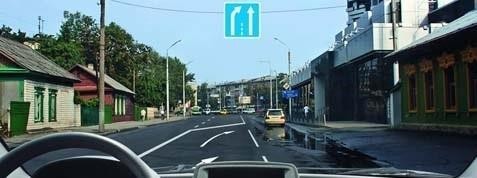
Are you obliged to give a signal with the turn indicator in the described situation?
- Yes
- No
- Yes, if there is a driver in the right lane
The correct answer: Yes
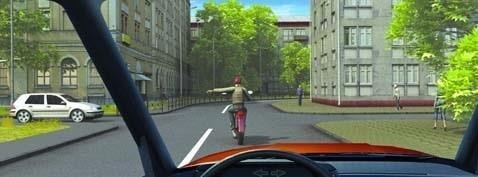
What is the motorcyclist signaling?
- Continuing straight
- Turning right
- Turning left or making a U-turn
The correct answer: Turning left or making a U-turn
The signal given by the light indicator for the maneuver must be stopped
- Immediately before the maneuver
- Immediately after the maneuver
- During the maneuver
The correct answer: Immediately after the maneuver
Giving a signal with the light indicator in the specified situation
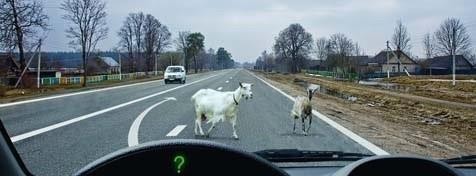
- Mandatory
- At the driver's discretion
The correct answer: Mandatory
Which driver is giving the right turn signal?
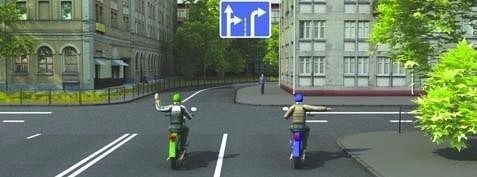
- Only the one on the right
- Both drivers
- Only the one on the left
The correct answer: Both drivers
Giving a signal with the light indicator while maneuvering in parking lots or car parks
- You are obliged
- You are not obliged
The correct answer: You are obliged
What can the driver's hand extended outside mean in this situation?
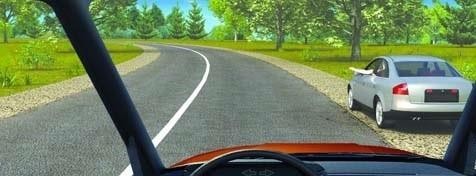
- Information from him about starting to move
- A sign requesting to stop
- General alarm signal
The correct answer: Information from him about starting to move
What signals should you give when making a U-turn along the indicated route?
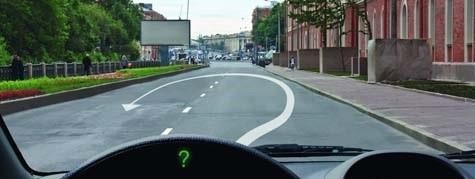
- Right
- Left
- First right, then left
The correct answer: First right, then left
If you intend to stop immediately after the intersection in order not to confuse other traffic participants, when should you turn on the right turn light indicator?
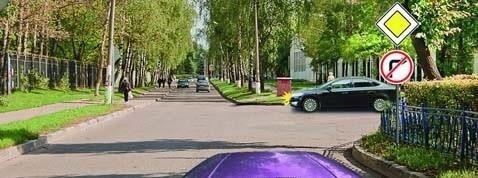
- Beforehand, before the intersection
- After entering the intersection
The correct answer: After entering the intersection
Does the driver of the vehicle finishing the overtaking have priority over the driver traveling in the adjacent lane while merging?
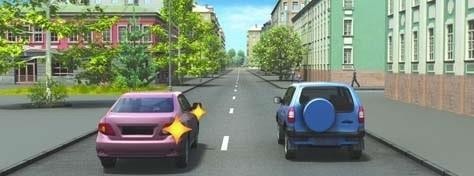
- No
- Yes
The correct answer: No
Yield to a driver coming from the adjacent area with special sound and light signals on
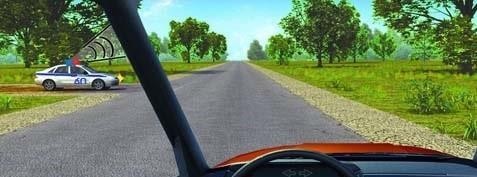
- Not obliged
- Obliged
The correct answer: Obliged
When passing the intersection straight, are we obliged to yield to the driver of a truck with a yellow flashing beacon on?
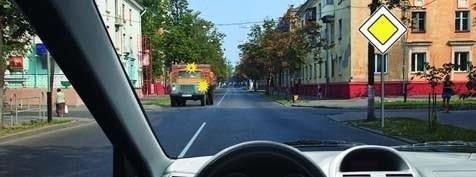
- Yes
- No
The correct answer: No
To whom are we obliged to yield?
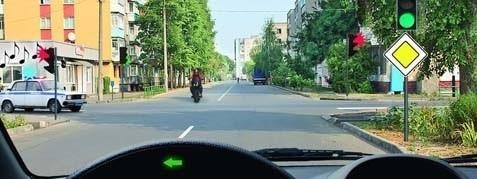
- Motorcycle driver
- Driver of a vehicle with special light and sound signals on
- Both drivers
The correct answer: Both drivers
To whom are we obliged to yield?
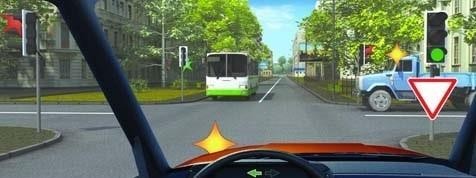
- Both drivers
- Driver of a truck with a yellow flashing beacon
- Only the bus driver
The correct answer: Only the bus driver
In this situation
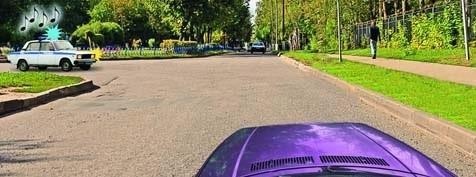
- You will cross the intersection first
- You must yield to the driver approaching from the left
The correct answer: You must yield to the driver approaching from the left
You must yield to
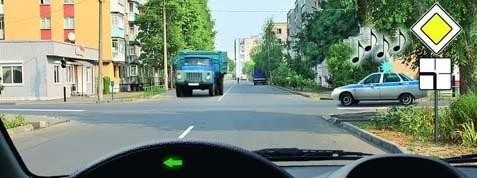
- Everyone
- The police car driver
- No one
The correct answer: The police car driver
When making a left turn
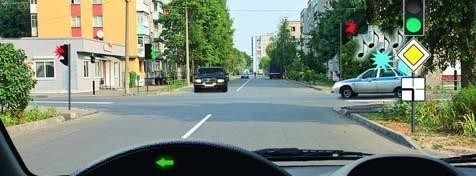
- You will cross the intersection first
- You will yield only to the police car driver
- You will yield to all drivers
The correct answer: You will yield to all drivers
What does an account add?
All questions and correct answers are accessible without signing up.
- Saved progress and continuation across devices
- A personal plan based on your target date
- Mistake analysis and targeted review
- Voice-guided learning and spoken answers