Supplementary Information Plates
The essentials
Supplementary plates are normally used together with a main road sign and clarify how that sign applies. They can specify direction, distance, area, time or a particular vehicle group, so they must be interpreted together with the main sign.
What to remember
A supplementary plate usually has no independent effect; it clarifies the main sign. It may indicate distance, area of effect, direction, days/hours, vehicle type or parking method. In an exam question, read the main sign first, then narrow its meaning using the supplementary plate.
Listen to the explanation
Educational material; not a substitute for the current official rules.
Try questions on this topic
A small practice set from this subtopic. The full question bank and saved progress are available in your account.
In which direction is traffic prohibited?
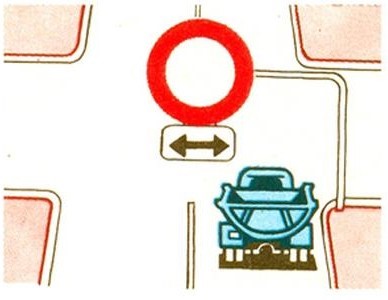
- Left and right
- Straight ahead and in the opposite direction
- Straight ahead only
- In all directions
The correct answer: Left and right
Movement to both the left and right is prohibited. The horizontal two-way arrow beneath the No Vehicles sign defines the directions to which the prohibition applies. Straight-ahead travel is not prohibited by this combination. Always interpret a main sign together with its supplementary plate.
In which direction is traffic prohibited?
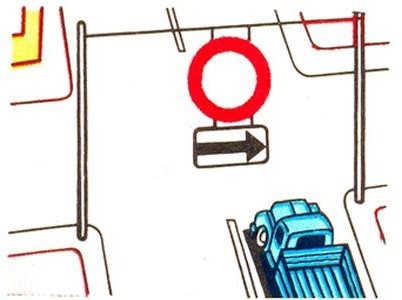
- Only to the left
- Only to the right
- Straight and left
- In all directions
The correct answer: Only to the right
Only movement to the right is prohibited. The right-pointing supplementary arrow beneath the No Vehicles sign limits the prohibition to the road on the right. Straight and left movements are not prohibited by this combination. Always read the main sign together with its supplementary plate.
This road sign indicates:
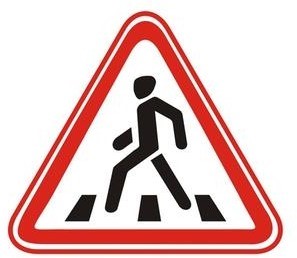
- A road section where there is a sidewalk or pedestrian path.
- A road section with a pedestrian crossing.
- A road section without a sidewalk or pedestrian path.
The correct answer: A road section with a pedestrian crossing.
The correct answer is “A road section with a pedestrian crossing.”. The decisive details are the sign category, symbol and any supplementary plate; together they give the exact instruction. Remember: category first, symbol second, supplementary plate last. The other options change the required direction, signal or path and therefore do not match the requirement shown or described.
Continue your learning journey
Your account brings together the full question bank, a personal plan, reviews and progress tracking.
Create an account and continue