Lanes and Carriageway
The essentials
This topic helps explain the structure of the carriageway, traffic lanes and central reservation. This knowledge is necessary to take the correct road position, choose a lane and safely perform maneuvers such as lane changes, turns and overtaking.
What to remember
A traffic lane is a longitudinal part of the carriageway wide enough for one line of vehicles. The number of lanes may be defined by markings or road width, but a driver must not create a dangerous ‘extra lane’ independently. When selecting a lane, consider directional arrows, road type, the required position before a turn and restrictions applying to heavy or slow vehicles.
Listen to the explanation
Educational material; not a substitute for the current official rules.
Try questions on this topic
A small practice set from this subtopic. The full question bank and saved progress are available in your account.
On roads with two-way traffic, in the absence of road signs, markings and dividing strips, drivers must bypass the elements of road structures on the roadway:
- On the right
- On the left
The correct answer: On the right
On a two-way road, when no sign, marking, or central reservation specifies another route, an element of a road structure must be passed on the right. This common rule keeps vehicles approaching from opposite directions on their own side and reduces the risk of entering the opposing lane.
Is the driver of a red car allowed to drive on the tramway?
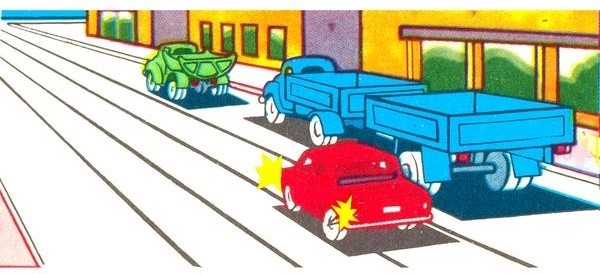
- Allowed
- Prohibited
The correct answer: Allowed
The correct answer is allowed. The red car enters tram tracks running in the same direction and level with the roadway. When the regular lanes in that direction are occupied, a driver may use those tracks provided the maneuver does not obstruct a tram and a safe lateral distance is maintained.
The driver of which vehicle must give way?
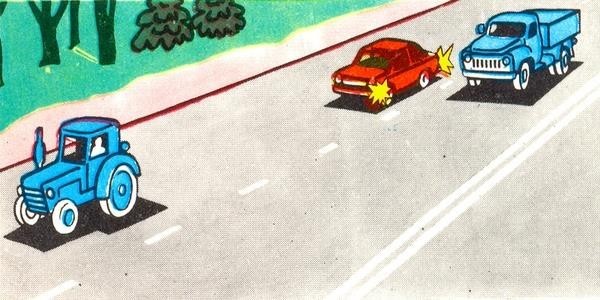
- Driver of a passenger car
- Truck driver
The correct answer: Driver of a passenger car
The correct answer is the passenger-car driver must yield. To pass the truck, the car has entered the opposing lane while a tractor is approaching. A driver beginning this maneuver must not obstruct oncoming traffic, so the car must abandon the pass, return to its lane, and leave the tractor a clear path.
Continue your learning journey
Your account brings together the full question bank, a personal plan, reviews and progress tracking.
Create an account and continue