Carriage of Passengers
The essentials
This topic presents the general requirements for safe boarding, alighting and transport of passengers. It is important to consider designated seats, safe use of doors, the number of passengers and the driver’s responsibility while moving.
What to remember
Passengers may be carried only in the manner and places intended for that vehicle. Before moving, make sure doors are closed, people are in a safe position and required seat belts or helmets are used. Additional requirements apply when carrying people in a truck or under special conditions.
Listen to the explanation
Educational material; not a substitute for the current official rules.
Try questions on this topic
A small practice set from this subtopic. The full question bank and saved progress are available in your account.
Are drivers of vehicles in populated areas required to give way to public vehicles starting from a designated and equipped haulting point?
- Yes
- No
The correct answer: Yes
The correct answer is yes. In a populated area, drivers must yield to a public route vehicle starting from a designated and equipped stop. The bus or trolleybus driver may move only after confirming that other drivers have noticed and are yielding.
Is the driver of a light passenger vehicle allowed to reverse and approach a passenger on a bridge?

- Yes
- Yes, if it does not obstruct other participants
- No
The correct answer: No
The correct answer is “No”. The rule depends on vehicle type, passenger age, seating position and the form of transport. Remember: vehicle type, passenger age and seating position can change the answer. The other options change at least one condition—such as the number, vehicle type, location or permitted action—so they do not apply to this situation.
In this situation, is it allowed to approach the passenger in reverse?
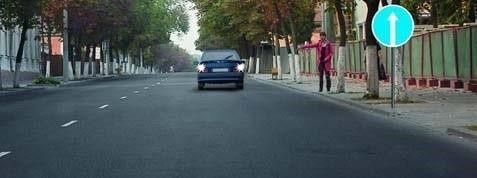
- Yes
- No
The correct answer: Yes
The correct answer is “Yes”. The rule depends on vehicle type, passenger age, seating position and the form of transport. Remember: vehicle type, passenger age and seating position can change the answer. The other options change at least one condition—such as the number, vehicle type, location or permitted action—so they do not apply to this situation.
Continue your learning journey
Your account brings together the full question bank, a personal plan, reviews and progress tracking.
Create an account and continue