Road Markings
The essentials
This topic explains the meaning of horizontal and vertical road markings. The learner should be able to understand lane boundaries, directions, stopping points and whether crossing or passing is permitted from the form and position of the markings.
What to remember
Markings can be horizontal or vertical and may supplement road signs. A solid line generally separates flows or boundaries that must not be crossed in the relevant situation, while a broken line may be crossed if no other prohibition applies and the maneuver is safe. A stop line shows the place where a vehicle must stop when required by STOP, a traffic light or a traffic controller.
Listen to the explanation
Educational material; not a substitute for the current official rules.
Try questions on this topic
A small practice set from this subtopic. The full question bank and saved progress are available in your account.
From which lane should you turn right in the situation shown?
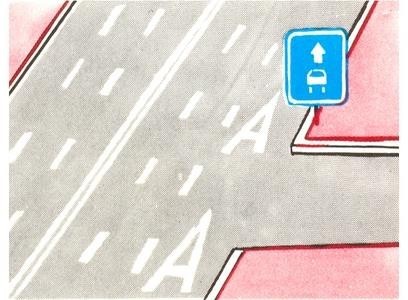
- Only from the second lane.
- Only from the rightmost lane marked "A".
The correct answer: Only from the rightmost lane marked "A".
The right turn must be made from the far-right lane marked A. Although it is reserved for route vehicles, the broken line allows a turning driver to enter it shortly before the turn, while yielding to traffic already there. Turning from the second lane would cut across the path of vehicles on the right.
A traffic circle is arranged at the intersection. The roadway you are approaching an intersection has two lanes. Which lane do you have to take to turn when entering the intersection?
- Right lane
- Left lane
- Right or left lane
The correct answer: Right or left lane
A roundabout may be entered from either the right or left lane unless signs or lane markings prescribe another arrangement. Choose the lane according to the intended exit and avoid abrupt lane changes. When entering, also obey the priority signs and yield to traffic that has the right of way.
Is it allowed to turn into the yard at this point?
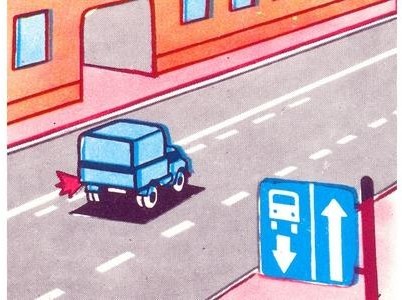
- Allowed
- Prohibited
The correct answer: Allowed
Entering the courtyard is allowed. An ordinary car may not travel continuously in the route-vehicle lane, but it may cross that lane to enter adjacent property where the marking permits. The driver must yield to vehicles lawfully using the reserved lane and to pedestrians whose path is crossed.
Continue your learning journey
Your account brings together the full question bank, a personal plan, reviews and progress tracking.
Create an account and continue