Tram Priority
The essentials
This topic presents the special features of priority when a tram is involved. The learner should distinguish the general rule from cases where traffic lights, signs or movement direction change the order of passage.
What to remember
A tram is a rail vehicle and under some equal conditions may have priority over non-rail vehicles, but this is not an absolute rule. Traffic lights, the traffic controller and priority signs must be considered first. At a controlled intersection, also distinguish tram-specific signals from the general traffic light for other vehicles.
Listen to the explanation
Educational material; not a substitute for the current official rules.
Try questions on this topic
A small practice set from this subtopic. The full question bank and saved progress are available in your account.
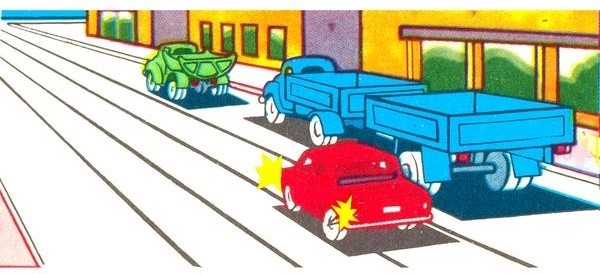
Is the driver of a red car allowed to drive on the tramway?
- Allowed
- Prohibited
The correct answer: Allowed
The correct answer is allowed. The red car enters tram tracks running in the same direction and level with the roadway. When the regular lanes in that direction are occupied, a driver may use those tracks provided the maneuver does not obstruct a tram and a safe lateral distance is maintained.
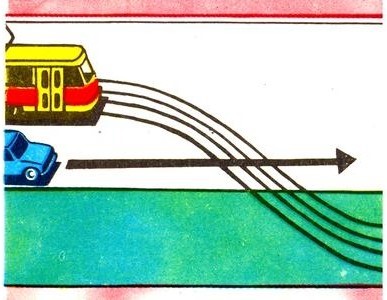
The driver of which vehicle must give way?
- Car driver
- Tram driver
The correct answer: Car driver
The correct answer is the car driver must yield to the tram. At an uncontrolled intersection of equal roads, a tram has priority over non-rail vehicles regardless of its direction. The car must stop before the tram tracks, wait until the tram has cleared the crossing completely, and only then continue straight.
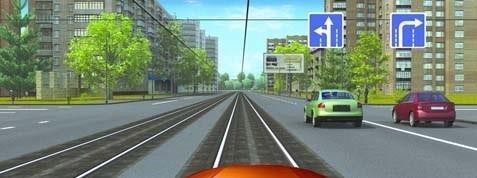
Is the driver allowed to drive on tram tracks in this situation?
- Yes
- Allowed only when reversing or making a left turn
- No
The correct answer: No
The correct answer is “No”. The exact conditions are decisive, especially limiting words, numbers and the type of vehicle or road. Remember the answer together with its condition, not as an isolated number or yes/no. The other options change at least one condition—such as the number, vehicle type, location or permitted action—so they do not apply to this situation.
Continue your learning journey
Your account brings together the full question bank, a personal plan, reviews and progress tracking.
Create an account and continue