Controlled Intersection
The essentials
At a controlled intersection, the order of passage is determined by an active traffic light or traffic controller. This topic teaches how to identify the active control first, then assess the permitted direction and the need to give way to other road users.
What to remember
A controlled intersection is one where the order of movement is currently determined by an active traffic light or traffic controller. A green light does not mean ‘ahead of everyone’: when turning left or making a U-turn, a non-rail vehicle gives way to oncoming vehicles travelling straight or turning right. When moving on a green arrow in an additional section together with a red/yellow signal, you must give way to road users moving from other permitted directions.
Listen to the explanation
Educational material; not a substitute for the current official rules.
Try questions on this topic
A small practice set from this subtopic. The full question bank and saved progress are available in your account.
The driver of which vehicle must give way?
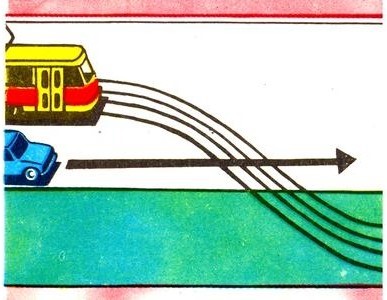
- Car driver
- Tram driver
The correct answer: Car driver
The correct answer is the car driver must yield to the tram. At an uncontrolled intersection of equal roads, a tram has priority over non-rail vehicles regardless of its direction. The car must stop before the tram tracks, wait until the tram has cleared the crossing completely, and only then continue straight.
Specify the order of passing the intersection
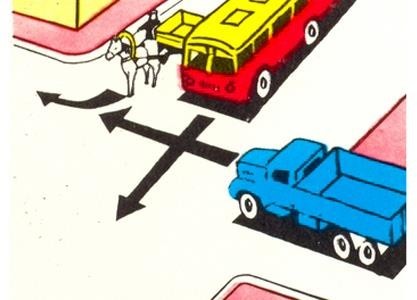
- Bus, truck, horse-drawn carriage
- Bus and horse-drawn carriage, truck
The correct answer: Bus and horse-drawn carriage, truck
The correct order is the bus and horse-drawn carriage first, then the truck. At an uncontrolled intersection of equal roads, drivers yield to traffic approaching from the right. The bus and carriage can pass simultaneously without conflicting, while the truck must wait and proceed only after the intersection becomes clear.
Is parking allowed at the indicated location?
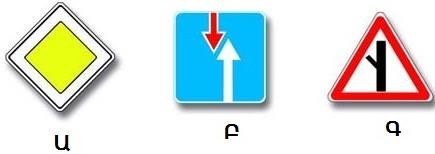
- Only A
- A and C
- All
The correct answer: A and C
The correct answer is “A and C”. The decisive details are the sign category, symbol and any supplementary plate; together they give the exact instruction. Remember: category first, symbol second, supplementary plate last. The other options change the required direction, signal or path and therefore do not match the requirement shown or described.
Continue your learning journey
Your account brings together the full question bank, a personal plan, reviews and progress tracking.
Create an account and continue